
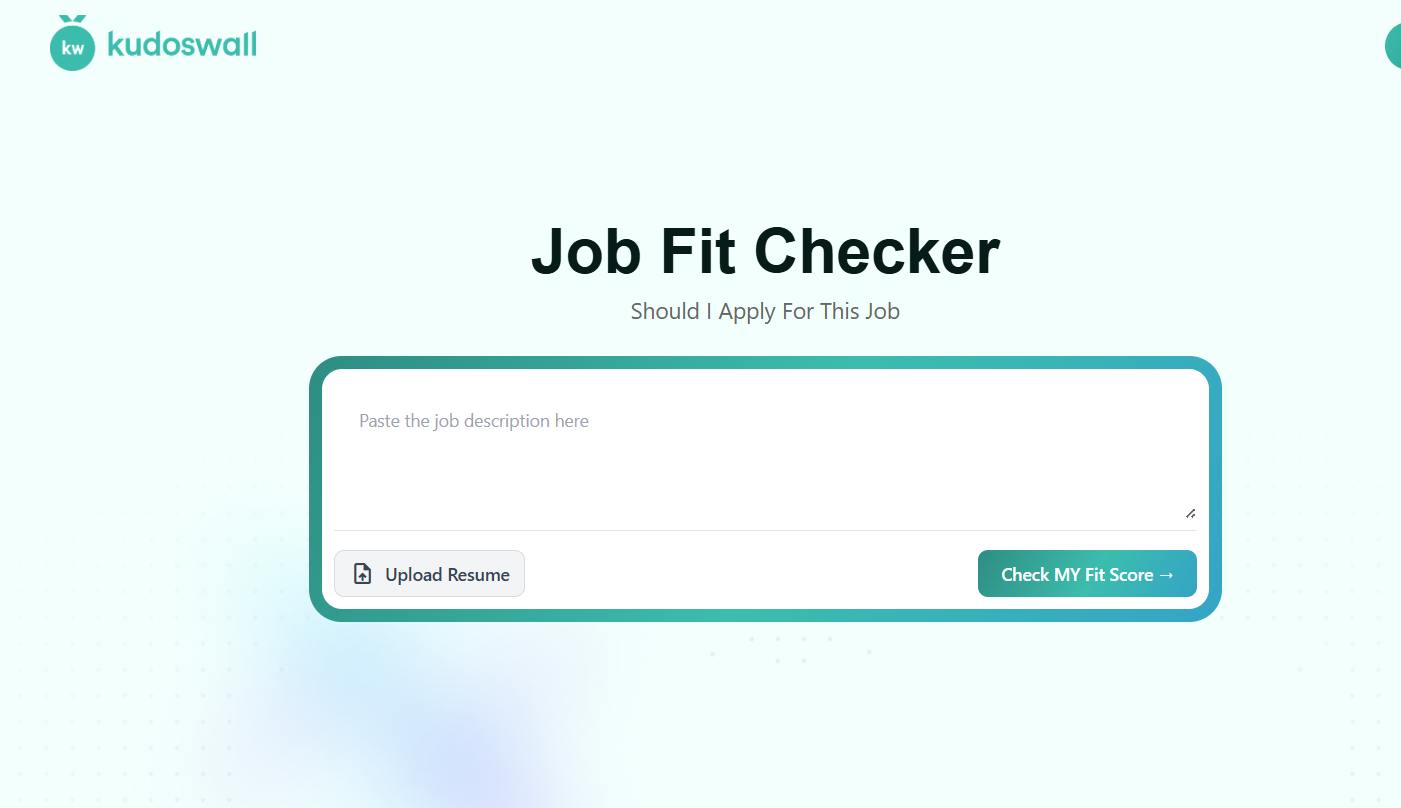
Most job seekers today are familiar with ATS resume checkers. You upload your resume. You check your score. You fix keywords. You apply.
But here’s the uncomfortable truth.
Passing an ATS does not mean the job is right for you.
In 2026, career success is no longer just about getting shortlisted. It’s about choosing roles that actually match your skills, goals, work style, and long-term growth. This is exactly where a job fit checker becomes far more important than most people realize.
A job fit checker doesn’t ask, “Will your resume pass the system?”
It asks a better question.
“Is this job actually right for you?”
Why ATS Resume Checkers Are Not Enough Anymore
ATS resume checkers help you optimize your resume for screening software. They look for keywords, formatting, and alignment with the job description. They are useful. No doubt.
But they only solve one part of the problem.
An ATS checker helps you get noticed.
A job fit checker helps you avoid the wrong job.
Many Gen Z and late millennial professionals land interviews, join companies, and then realize within months that the role is not what they expected. The skills don’t match. The growth isn’t there. The job drains them. The culture feels wrong.
That’s not a resume problem.
That’s a job fit problem.
What Exactly Is a Job Fit Checker?
A job fit checker is a tool that evaluates how well a job aligns with you as a professional.
Instead of focusing only on keywords, it compares:
- Your skills vs job requirements
- Your experience level vs role expectations
- Your career goals vs job growth path
- Your strengths vs daily responsibilities
- Your profile vs the actual role reality
It helps you answer a crucial question before applying:
“Should I apply for this job at all?”
Why Job Fit Matters More for Gen Z and Late Millennials
Career priorities have changed.
Gen Z and late millennials are not just chasing job titles. They care about:
- Skill growth
- Work-life balance
- Learning opportunities
- Meaningful work
- Long-term relevance
A job fit checker supports these priorities. It helps you make intentional career decisions instead of reactive ones.
Instead of applying to 100 roles blindly, you apply to 10 roles that truly match you.
That changes everything.
How Job Hunting Has Changed in the Last Few Years
Earlier, people applied based on brand names.
Today, people leave brand names because the job wasn’t right.
Earlier, stability mattered more than fit.
Today, fit determines whether someone stays or leaves.
Earlier, job descriptions were trusted blindly.
Today, professionals know that JDs rarely tell the full story.
This is why tools like a job fit checker are becoming essential in modern job searches.
What a Job Fit Checker Looks At (That ATS Tools Don’t)
Let’s be practical.
A good job fit checker evaluates things like:
1. Skill Overlap
Do you actually use most of the skills required in the role?
Or are you underqualified or overqualified?
2. Experience Alignment
Is the role designed for someone at your level?
Or will you struggle or stagnate?
3. Role Expectations
Does the job focus on execution, strategy, or leadership?
And is that what you want right now?
4. Growth Path
Does this role move you closer to your long-term goals?
Or does it box you into a narrow path?
5. Transferable Skills
Even if you don’t meet 100% requirements, can your existing skills translate well?
These insights are what make a job fit checker powerful.
Why Many Professionals Feel “Stuck” After Switching Jobs
This is a pattern seen across industries.
People optimize their resumes perfectly.
They crack interviews.
They accept offers.
And then they feel stuck again.
The issue isn’t effort.
The issue is alignment.
A job fit checker helps you pause and assess before making a move. It reduces emotional decisions and brings clarity into the process.
How to Use a Job Fit Checker Smartly
A job fit checker is not about rejecting yourself.
It’s about understanding trade-offs.
Here’s how to use it well:
- Upload your resume
- Add the job description
- Review match insights honestly
- Look beyond the final score
- Identify gaps and strengths
- Decide whether the role makes sense now
Sometimes the result will say, “Great fit.”
Sometimes it will say, “Good resume match, poor career fit.”
Both insights are valuable.
Job Fit Checker vs Blind Applications
Blind applications lead to:
- Burnout
- Rejections
- Wrong job choices
- Low confidence
Using a job fit checker leads to:
- Better decision-making
- Fewer but smarter applications
- Higher interview confidence
- Better long-term satisfaction
For Gen Z and late millennials, this approach saves time and emotional energy.
Why Job Fit Checkers Improve Interview Performance
Here’s an underrated benefit.
When you apply to jobs that truly fit you, interviews feel easier.
You:
- Speak confidently
- Understand the role clearly
- Connect your experience naturally
- Ask better questions
- Sound more authentic
Interviewers sense this clarity.
A job fit checker doesn’t just help you choose jobs. It helps you show up stronger during interviews.
The Future of Job Search Is Two-Sided
In the past, the question was:
“Will the company select me?”
In 2026, the real question is:
“Should I select this company?”
ATS tools answer the first question.
A job fit checker answers the second.
And both are equally important.
Final Thoughts
A successful career is not built on random job switches. It’s built on intentional moves.
ATS resume checkers help you pass systems.
But a job fit checker helps you protect your time, energy, and future.
For Gen Z and late millennials navigating a fast-changing job market, this tool is not a luxury. It’s a necessity.
Before your next application, don’t just ask:
“Will my resume get shortlisted?”
Ask the better question:
“Is this job actually right for me?”
That one question can change your entire career trajectory.