
G2A: Big Name, Bigger Questions
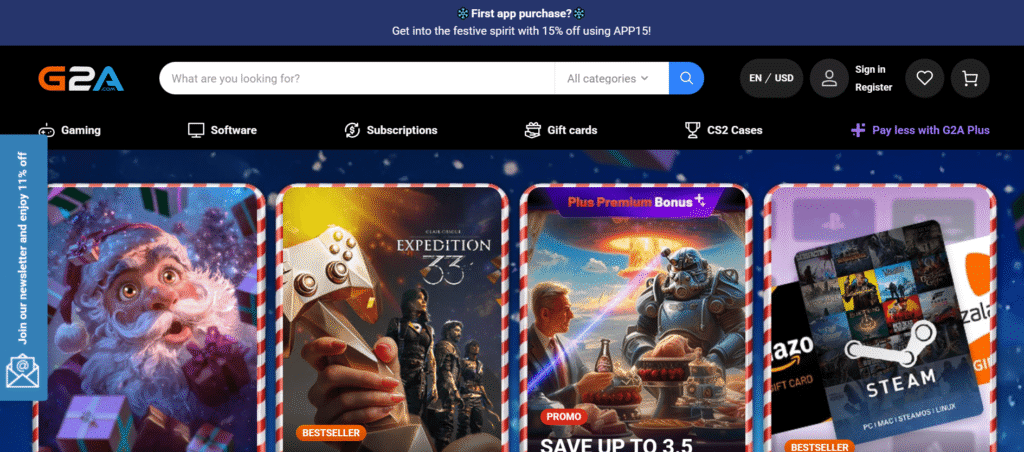
Let’s be honest, G2A didn’t become popular by accident. For years, it has dominated the game-key marketplace by offering prices that often look too good to ignore. If you’ve ever searched for a discounted PC game, chances are G2A showed up on page one.
But popularity doesn’t always equal peace of mind.
As more gamers dig deeper, some real pain points keep surfacing:
- Hidden service fees that only appear at checkout
- The widely debated “G2A Shield”, which adds a recurring cost for buyer protection
- And the controversial inactive account fee, where users have reportedly been charged simply for not logging in
None of these issues make G2A unusable, but they do make many buyers stop and ask a critical question:
Are there safer, simpler, and more transparent alternatives to G2A?
That’s exactly what this guide is here to answer.
How Game Key Marketplaces Actually Work (And Why It Matters)
Before comparing g2a alternatives, it’s important to understand how buying digital game keys really works. Not all key sellers operate the same way, and this difference directly impacts risk, refunds, and reliability.
1. The Grey Market (P2P Model)
This is the model G2A is built on.
Here, users sell keys to other users, It’s a peer-to-peer system. The platform acts as a middleman, not the original source of the key.
What this means in practice:
- Keys may come from different regions, promotions, or bulk purchases
- There is a higher risk of revoked or duplicate keys
- Platforms rely heavily on buyer-protection systems and dispute algorithms to resolve issues
This is why services like “buyer protection,” “shield plans,” or “safe checkout” exist in the first place. They’re not bonuses, they’re risk-control mechanisms.
Grey-market platforms can offer very low prices, but that discount comes with a trade-off: you’re trusting the seller, not the publisher.
2. The White Market (Official API Model)
White-market platforms work very differently.
These stores connect directly with publishers or authorized distributors and deliver keys via official APIs for platforms like:
- Steam
- Ubisoft Connect (Uplay)
- EA App (Origin)
Because the keys are issued directly:
- There is no resale risk
- Keys cannot be revoked
- Refund and support policies are clearer and publisher-aligned
In short: no buyer protection add-ons are needed, because the key source itself is legitimate.
Prices may sometimes be slightly higher, but what you gain is certainty.
What You’ll Get From This Guide
I didn’t create another generic “list of sites like G2A.”
Instead, this guide delivers:
- A data-backed comparison of G2A alternatives
- Clear categorization based on:
- Safety & legitimacy
- Pricing competitiveness
- Marketplace vs API-based models
- A practical breakdown so you can choose what fits your risk tolerance, not just your budget
Whether you want the cheapest possible key, a 100% risk-free purchase, or a balanced middle ground, you’ll know exactly where to go by the end of this article.
Let’s get into the g2a alternatives without the fine print surprises.
Understanding the Tech: How Game Key Marketplaces Work
Ever wondered how a game that costs $60 on Steam magically appears for $15 on a marketplace? It’s not just “Internet magic” No!! it’s a blend of global economics, clever software logic, and a bit of digital detective work.
To help you shop smarter, let’s peel back the curtain on the tech and tactics that power these platforms.
Region Locking (Geo-blocking): The Digital Border Patrol
In the world of software, not all copies are created equal. Developers often use Region Tagging to adjust prices based on a country’s purchasing power. For example, a gamer in Brazil or Turkey might pay significantly less for the same title than someone in the US or UK.
How it works (Technically): When a key is generated, it contains metadata flags that link it to a specific region (e.g., RU/CIS, LATAM, or EU). Platforms like Steam or Epic use IP Geolocation and Account Metadata to verify your location. If your account region doesn’t match the key’s tag, the software throws a “Product Not Available in Your Territory” error.
The VPN Trap: You’ll often see sellers suggesting a VPN to “spoof” your location and activate a cheaper regional key.
Warning: This is a major violation of most platforms’ Terms of Service (ToS). Steam’s automated “Fraud Detection” algorithms are now incredibly sensitive. Using a VPN to bypass regional pricing can result in a permanent account ban and effectively locking you out of your entire game library.
Key Sourcing: Where Do the Keys Actually Come From?
Marketplaces don’t just “find” keys; they are sourced through two primary software-driven methods.
1. Wholesale Keys (The “Liquidation” Logic)
Think of this as the “Outlet Store” of the gaming world. When a game has been out for a while, or a publisher needs a quick cash injection, they sell massive batches of keys and sometimes millions to authorized wholesalers.
The Tech Angle: These keys are delivered via secure CSV or API exports directly from the publisher’s database. Because the wholesaler buys in such extreme volume, they get a massive discount, which they then pass on to you while still taking a small cut. This is 100% legit and safe.
2. Regional Arbitrage (The G2A Model)
This is where things get interesting (and a bit “grey”). Arbitrage is the practice of buying a product in a low-price market and selling it in a high-price market.
The Mechanism: A seller (often a professional outfit) uses automated scripts to monitor price drops in regions like Argentina or India. They purchase hundreds of keys at the local price and then list them on a global marketplace like G2A for a slightly higher price that is still lower than the “Western” retail cost.
The Risk Factor: While the keys themselves are often genuine, the method of acquisition can be risky. If the seller used a stolen credit card or a fraudulent “Reviewer Request” script to get those keys for free, the publisher might eventually revoke the key, leaving you with a “dead” game and a headache.
How Marketplaces Use Software to Protect You
Because grey markets can be “wild,” top competitors use sophisticated Seller Verification Algorithms to maintain trust.
Trust Scores: Software tracks a seller’s successful transactions vs. disputes. If a seller’s “Revoke Rate” hits a certain threshold, the system automatically freezes their funds.
Escrow Systems: When you buy a key, your money doesn’t go straight to the seller. It’s held in an Escrow API (like a digital safe) until the software confirms the key was successfully revealed and hasn’t been flagged as a duplicate.
Best G2A Alternatives for Cheap Game Keys in 2026 (Safe & Legit)
If you’ve ever scrolled through Reddit or gaming forums, you’ve definitely seen the “G2A vs. The World” debate. But while G2A is the giant, there are other heavy hitters in the “Grey Market” that often provide a smoother experience or better prices.
Let’s dive into Category A: The direct rivals. These sites use a Peer-to-Peer (P2P) marketplace model (mostly), but they’ve tweaked the software logic to fix the “sketchy” vibe G2A sometimes gives off.
Category A: The “Grey Market” Competitors (Direct G2A Rivals)
1. CDKeys / Loaded (The Top G2A Competitor)
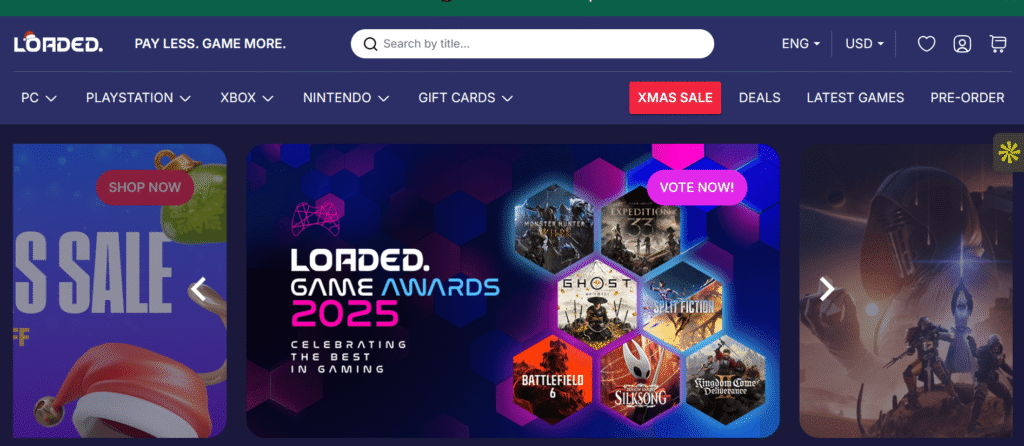
I’m putting CDKeys at the top on this list of sites like G2A because it’s actually a bit of a “wolf in sheep’s clothing.” While it’s often grouped with grey markets, its business logic is fundamentally different.
Why it ranks #1: Unlike G2A, CDKeys is not a marketplace where random people sell to you. They act as the sole merchant.
The Tech Edge (Centralized Inventory): Because they control the entire inventory, you don’t have to scan through 50 different sellers to find one with a 99% rating. Their software manages a centralized database of keys, which virtually eliminates the risk of “double-sold” keys or stolen credit card fraud that plagues P2P platforms.
No “Shield” Fees: You pay the price you see. Period. No hidden insurance fees or service taxes at the final checkout.
Instant Automation: They use highly optimized automated email scripts that trigger the moment your payment is verified. You usually get your key in your inbox before you can even refresh the page.
Pro and cons of CDKeys / Loaded
Pro:
No Hidden Fees: What you see on the product page is exactly what you pay at checkout.
High Reliability: Since they don’t use third-party sellers, the risk of getting a “fake” or “stolen” key is near zero.
Instant Delivery: Their automated system sends keys to your inbox within seconds of payment.
Great Trustpilot Score: Consistently rated higher than G2A for customer satisfaction.
Cons:
Smaller Selection: Because they source their own stock, they might not have every niche indie game or obscure software.
Strict Refund Policy: Once you click “Reveal Key,” getting a refund is nearly impossible unless the key is proven defective.
2. Eneba (The Rising Star G2A Competitor)
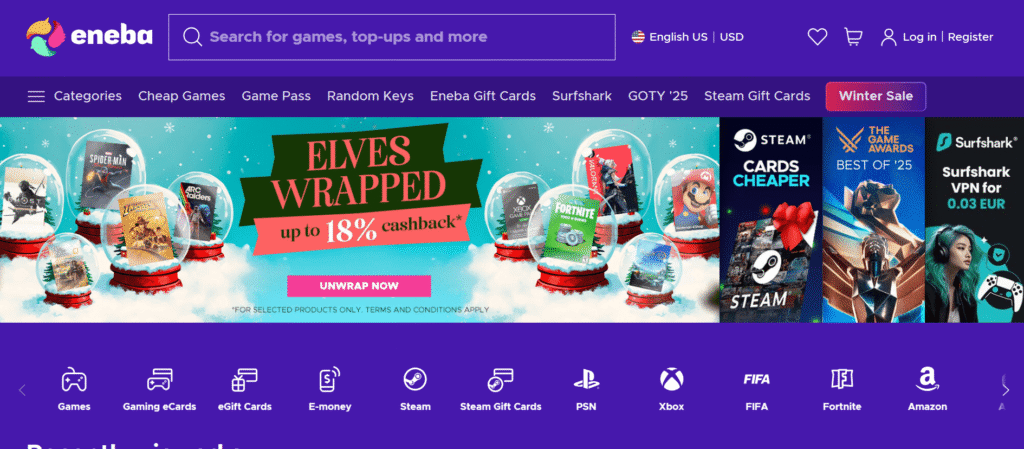
If G2A is the old, cluttered marketplace, Eneba is the sleek, modern boutique and another site like G2A. Based in Europe, they’ve exploded in popularity over the last few years by focusing on a “cleaner” software experience.
Software Edge (The Vetting Algorithm): Eneba’s backend is much stricter than G2A’s. They use a multi-layer KYC (Know Your Customer) process and a vetting algorithm that monitors seller behavior in real-time. If a seller shows even a tiny spike in “revoked keys,” the software automatically freezes their payouts and delists their inventory.
The UI Experience: It feels less like a shady bazaar and more like an official store. The search logic is snappy, and the region-lock warnings are prominently displayed in the UI so you don’t accidentally buy a “Global” key that actually only works in Europe.
Pro and cons of Eneba
Pros:
Strict Seller Vetting: Their software blocks low-quality sellers much faster than G2A.
Excellent Mobile App: One of the few marketplaces with a truly functional and safe mobile app for buying on the go.
User-Friendly UI: Very clear warnings about region locks and platform compatibility (Steam vs. Epic vs. Xbox).
Cons:
Payment Fees: They often add a “Processing Fee” at the very last step of checkout, which can make the game $1–$2 more expensive than first advertised.
Regional Pricing Complexity: Some of their best deals are heavily region-locked, requiring extra caution before buying.
3. Kinguin (The Direct G2A Competitor)
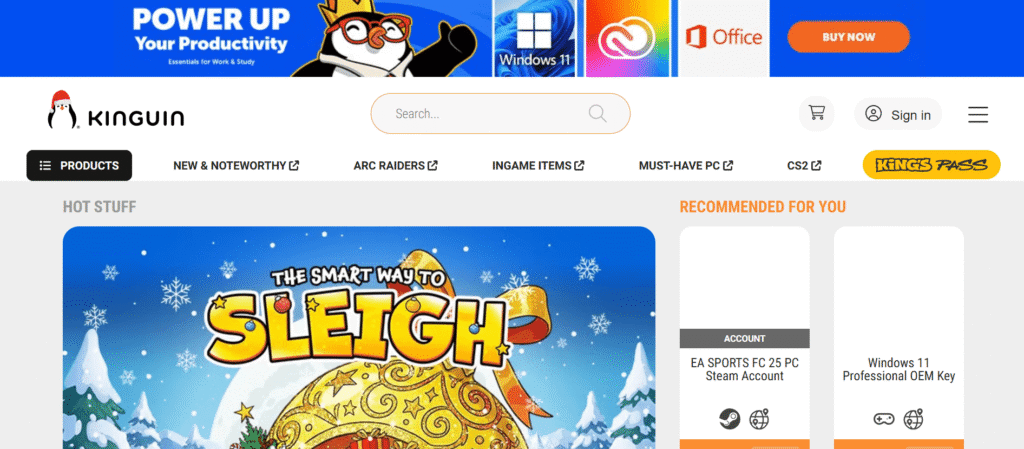
If you want the closest sites like G2A but with a slightly different flavor, Kinguin is the one. They’ve been G2A’s biggest rival for a decade, operating on a pure P2P marketplace model.
The Comparison: Like G2A, they have thousands of individual sellers. To combat the risks of this model, they use a Buyer Protection insurance system.
Why Use It? Kinguin is a fantastic G2A competitor for obscure software. While CDKeys focuses on AAA games, Kinguin’s marketplace software allows for a massive variety of listings. Need a cheap Windows 11 Pro key or a license for a niche antivirus? Kinguin usually has dozens of sellers competing, driving the price down to almost nothing.
My suggestion: Always look for the “Recommended Seller” badge. Kinguin’s software tags sellers who have high volume and low dispute rates, making it much easier to filter out the noise.
Pro and Cons of Kinguin
Pros:
Massive Variety: Beyond games, they are the best place for cheap Windows licenses, Office keys, and even in-game currency/skins.
Buyer Protection: They offer an optional “Kinguin Buyer Protection” for a small fee that guarantees a 100% refund if anything goes wrong.
Competitive Bidding: Because so many sellers compete on the platform, you can often find the absolute lowest price on the internet here.
Cons:
Service Fees: Similar to G2A, the service fees and “Buyer Protection” costs can stack up quickly at checkout.
Support Speed: Because they deal with thousands of third-party sellers, their customer support tickets can sometimes take 24–48 hours to resolve.
Which one should you choose?
- If you want maximum safety and no hidden fees: CDKeys.
- If you want a modern, fast interface with good support: Eneba.
- If you’re hunting for operating systems or rare software: Kinguin.
Category B: The “White Market” (100% Legit & Ethical)
4. Green Man Gaming (GMG Top Competitor of G2A)
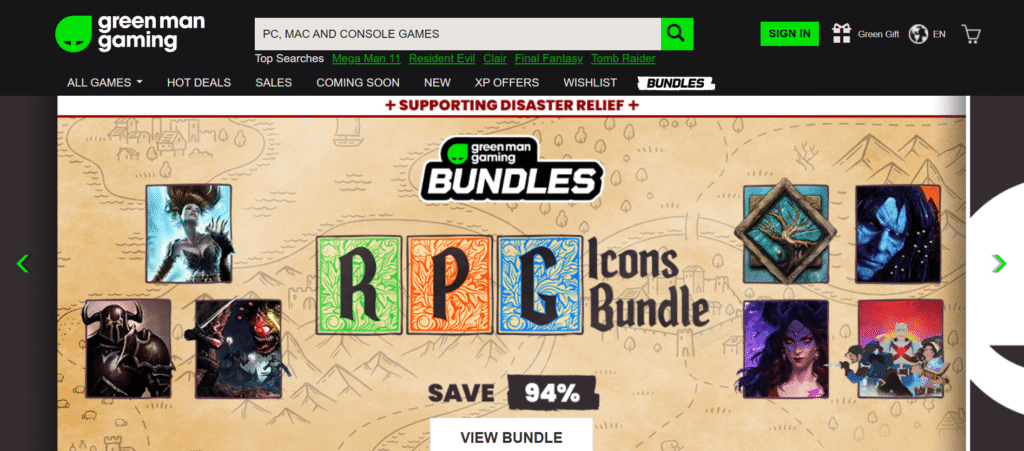
If you want the safety of Steam but with better discounts, Green Man Gaming is your best friend and another great site like G2A. They are official partners with the “Big Three” (Sony, Nintendo, and Microsoft) along with giants like Bethesda.
The Tech Edge (The XP System): GMG doesn’t just sell games; they’ve built a sophisticated gamified loyalty program called “XP.” Their software tracks your purchase history and “levels you up.”
Why it matters: Higher XP levels unlock “Bronze, Silver, and Gold” tiers, giving you access to exclusive voucher codes and deeper discounts that aren’t visible to the general public. It’s a clever software-based retention tool that rewards you the more you shop.
Pros: 100% publisher-sourced keys, massive pre-order discounts, and zero risk of key revocation.
Cons: Regional availability can be strict; if a publisher hasn’t authorized a sale in your country, GMG won’t show you the listing.
5. Humble Bundle (The Good Guy Competitor of G2A)
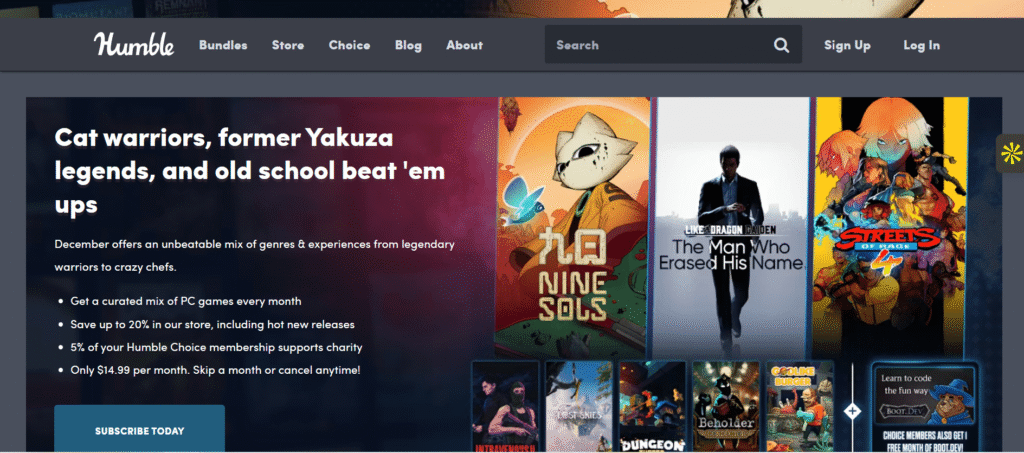
Humble Bundle changed the game by proving that you can buy software and save the world at the same time. Their model is famous for the “Pay What You Want” bundles.
The Split-Revenue Model: When you check out, Humble’s software gives you a set of sliders. You can choose exactly how your money is split between the Game Developer, a Charity (like Red Cross or WWF), and the Humble team itself.
The “Bundle” Logic: They are the undisputed kings of bulk buying. You can often snag $200 worth of games for just $15. It’s the most cost-effective way to build a massive Steam library legally.
Pros: Incredible value, supports great causes, and includes the “Humble Choice” monthly subscription which offers curated top-tier games.
Cons: You don’t always get to choose the specific games in a bundle; it’s a “take it or leave it” package.
6. Fanatical (The Flash Sale Specialist)
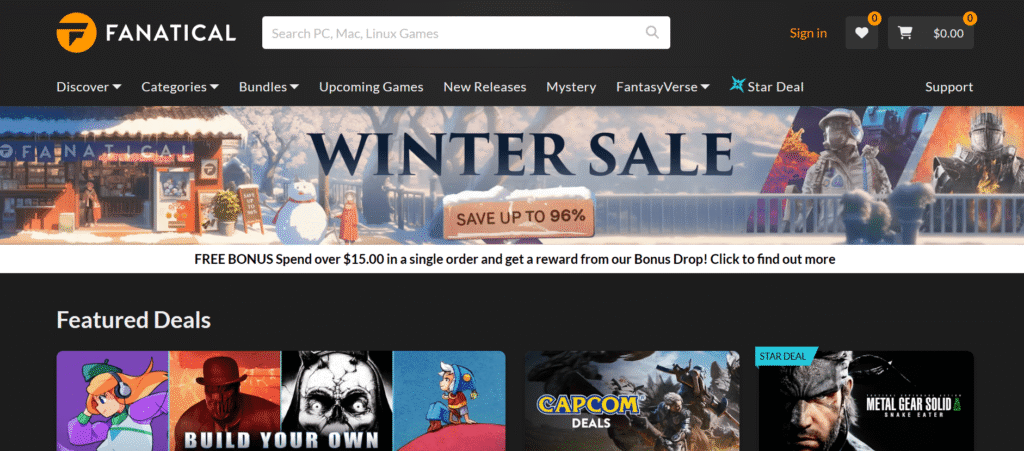
Formerly known as Bundle Stars, Fanatical has evolved into a powerhouse of automated deals. They are based in the UK and are officially licensed by over 1,000 publishers.
The “Star Deal” Algorithm: Fanatical is famous for its “Star Deals”, these are extreme, time-gated discounts (often 90% off) that run on a 24-to-48-hour countdown. Their backend software is designed to create a “flash sale” environment that rivals Steam’s own Seasonal Sales.
Specialty Bundles: Unlike Humble, which focuses on charity, Fanatical focuses on niche bundles. Want every game in the Fear franchise? Or a “Build Your Own” bundle of indie RPGs? Their software allows you to pick and choose your own discount tiers.
Pros: Best for “Build Your Own” bundles and lightning-fast key delivery via a very clean, ad-free interface.
Cons: Their refund policy is very strict once the key is revealed (standard for authorized sellers).
Quick Comparison: White Market Pros & Cons
Feature | Green Man Gaming | Humble Bundle | Fanatical |
Best For | Pre-orders & AAA Titles | Charity & Bulk Bundles | Flash Sales & Indie Bundles |
Trust Factor | 10/10 (Official Partner) | 10/10 (Official Partner) | 10/10 (Official Partner) |
Loyalty Perks | XP Tiered Discounts | Humble Choice Monthly | Rewards Vouchers |
The "Catch" | Prices slightly higher than Grey Markets | Bundle-only focus | Limited time on best deals |
Category C: The Aggregators (The “Trivago” of Gaming)
These aren’t stores; they are comparison engines. Their software uses complex web-scraping scripts and API integrations to pull real-time pricing data from all the sites we’ve mentioned so far, G2A, CDKeys, Humble, and more and puts them into one clean list.
7. GG.deals (The Data Nerd’s Choice)
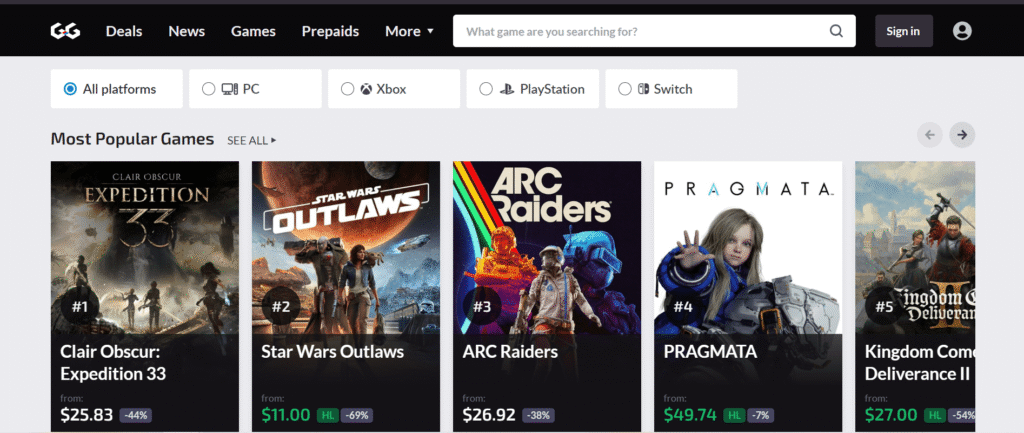
In my opinion, GG.deals is the most sophisticated tool in a gamer’s arsenal. It doesn’t just show you the current price; it gives you the context you need to make a smart decision.
The “Two Worlds” Logic: GG.deals has a unique software feature that splits the market into two categories: Official Stores and Keyshops. If you’re worried about safety, you can literally flip a switch to hide all grey-market sellers and only see legit, authorized deals.
Historical Low Data: Their software tracks price history over years. It will tell you: “Hey, this game is $10 now, but it was $5 last Christmas.” This helps you decide if you should buy now or wait for the next seasonal sale.
Automation at its Best: You can sync your Steam Wishlist via API. The moment a game you want hits a certain price point, the site sends you an automated alert.
Pros: Clean UI, incredibly detailed risk warnings for keyshops, and zero-ad experience.
Cons: The wealth of data can be slightly overwhelming for a casual user.
8. AllKeyShop (The Global Comparison King and Site like G2A)
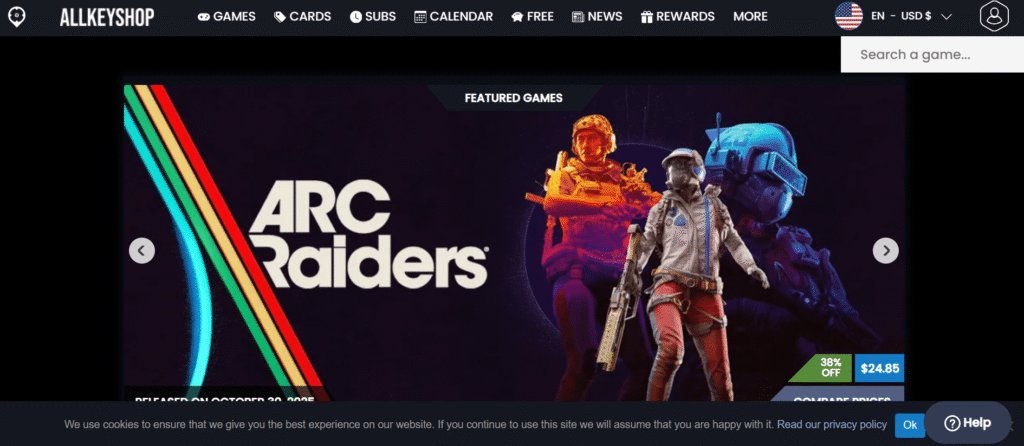
If GG.deals is about data, AllKeyShop is about pure, raw speed and coverage. They track more stores globally than almost any other platform.
The “Certified” Trust Metric: Because they index so many grey-market shops, they’ve developed an internal verification system. Their team (and their software) regularly tests stores for delivery speed and key validity. Stores that pass receive a “Certified” sticker, which is a great shortcut for identifying safe sellers in a crowded market.
Browser Extension Tech: They offer a Chrome/Firefox extension that automatically pops up when you’re looking at a game on the Steam or PlayStation store. It will say, “Wait! Don’t buy this for $40 here; it’s $12 on this other site.” It’s a “set it and forget it” way to save money.
Pros: Includes coupons and voucher codes in the price calculation, covering consoles (Xbox/PS5) better than most.
Cons: The website is very heavy on ads and “spin-the-wheel” pop-ups, which can make the experience feel a bit cluttered.
Category D: The “Hybrid” Retailer & Official Powerhouses
9. Instant Gaming (The Direct Discount Retailer Site like G2A)
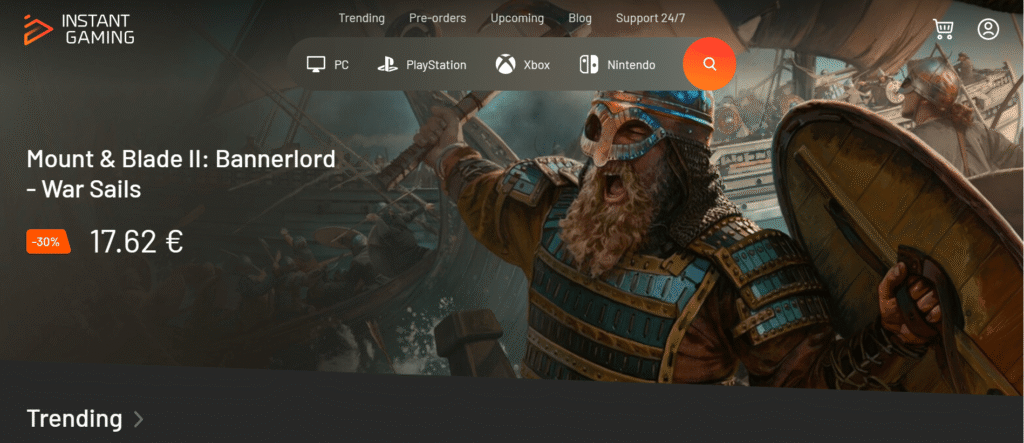
While G2A and Kinguin are marketplaces (where random people sell to you), Instant Gaming is a site like G2A that operates on a Retailer Model.
The Software Logic: They don’t allow third-party sellers. Instead, their backend software manages a massive, direct inventory. They buy games in extreme bulk when they are on sale and store the keys in their own secure database.
The “Instant” Automation: Because they aren’t waiting for a third-party seller to “approve” a sale, their delivery scripts are some of the fastest in the industry. The moment your payment clears, the key is pulled from their inventory and displayed on your screen.
Pros:
- No marketplace “scam” risk since you buy directly from the site.
- Highly rated mobile app and very clean, fast UI.
- Prices often rival the grey market without the “buyer protection” fees.
Cons:
- Prices are often shown without VAT/Tax until the final step.
- They may require a photo of your ID for “First-time Buyer” verification to prevent fraud.
10. Gamesplanet (The Regional Pros)
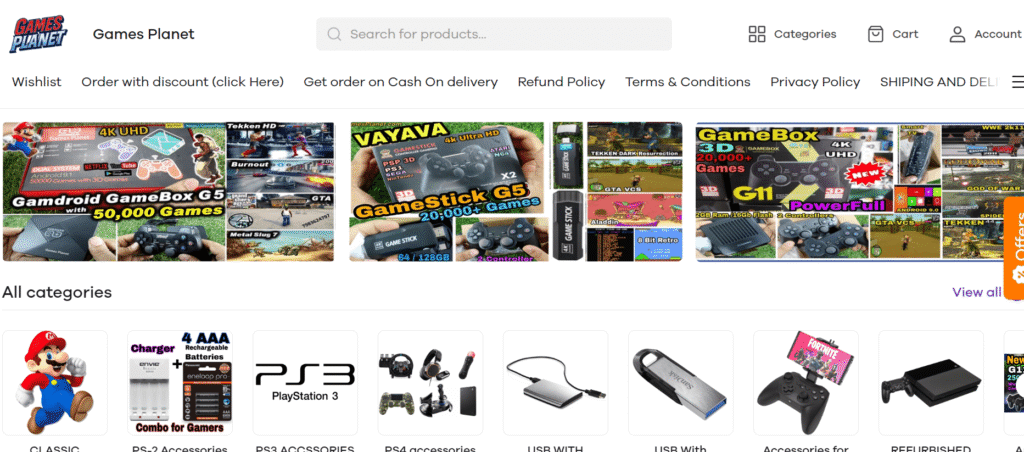
If you live in Europe or the UK, Gamesplanet is site like G2A and a name you need to know. They are strictly “White Market” (Authorized), but they specialize in navigating the complex world of Regional DRM.
The DRM & Region Logic: Their website has one of the best “Region & DRM” information boxes in the business. Before you click buy, their software checks your IP and tells you exactly which platform it activates on (Steam, Ubisoft Connect, etc.) and if it will work in your specific country.
Official Ties: They work directly with publishers like Bandai Namco and Ubisoft, ensuring that your money goes back to the creators.
Pros:
- 100% official keys with zero risk of revocation.
- Excellent regional customer support (English, French, and German).
Cons:
- Their “Deep Discounts” are less frequent than on sites like CDKeys.
- Some titles are restricted to specific European regions.
Quick Comparison: The Best G2A Alternatives at a Glance (2026)
Site Name | Market Type | Protection Fee? | Refund Policy | TrustPilot Score |
CDKeys | Grey (Direct Retail) | None | 14 Days (If unrevealed) | 4.8 / 5 |
Instant Gaming | Grey (Direct Retail) | None | 14 Days (If unrevealed) | 4.7 / 5 |
Green Man Gaming | White (Authorized) | None | 14 Days (If unrevealed) | 4.7 / 5 |
Fanatical | White (Authorized) | None | 14 Days (If unrevealed) | 4.6 / 5 |
Eneba | Grey (P2P) | Service Fee | 14 Days (Dispute-based) | 4.3 / 5 |
Kinguin | Grey (P2P) | Buyer Protection | 14 Days (Dispute-based) | 4.6 / 5 |
Humble Bundle | White (Authorized) | None | Up to 60 Days (Discretionary) | 3.3 / 5 |
Note on Humble Bundle: Their lower TrustPilot score is often due to recent issues with “out of stock” keys for certain bundles, though they remain 100% legitimate and safe.
Why These Metrics Actually Matter to You
Reading a table is one thing; knowing how it impacts your wallet is another. Here’s the “between the lines” look at those columns:
Market Type (Grey vs. White): This is your risk-to-reward ratio. White Market sites (like GMG or Fanatical) are like buying from an authorized dealership, which is zero risk of the “car” (key) being stolen. Grey Markets are like a giant digital flea market; you can find insane deals, but you’re relying on the platform’s software to vet the sellers.
Buyer Protection Fees: This is the “hidden tax.” G2A and Kinguin often suggest an extra fee for “guaranteed” safety. Sites like CDKeys or Instant Gaming bake that safety into their own model, meaning the price you see is the price you pay.
The Refund Logic: In the software world, a “revealed” key is a used key. If you click that “Reveal Key” button, most sites consider the transaction final. The only exception is usually Humble Bundle, which has a reputation for being more lenient if you reach out to their support team within a reasonable window.
TrustPilot Scores: These are essentially the “vibe check” from the community. A score above 4.0 generally means the platform’s automated delivery and support scripts are running like a well-oiled machine.
Safety Protocol: How to Spot a Scammer
When you’re navigating a peer-to-peer marketplace, you aren’t just buying a game; you’re entering a contract with a stranger. To keep your library safe and your wallet full, you need to think like a software developer and analyze the data before you click “Buy.”
Here is my “Safety Protocol” for dodging the bad actors and finding the gems.
1. Decoding the Rating Algorithm: More Than Just a Number
At first glance, a seller with a 98% rating looks like a safe bet. But if you don’t look at the underlying data, you might be falling for a classic “Volume Trap.”
The Ratio Rule (Quality vs. Quantity): Always check the Total Transactions alongside the percentage.
Example A: 99.5% Positive with 50,000+ sales. (This is a professional outfit with a high-performance score).
Example B: 100% Positive with 12 sales. (This could be a “burner” account that hasn’t been active long enough to get caught).
The “Performance Score” Logic: Many platforms now use backend algorithms to assign badges like “Excellent Seller.” These aren’t just participation trophies. To earn these, sellers must maintain a high Response Ratio (how fast they help you) and a low Resolution Rate (how often a dispute is settled in the buyer’s favor).
My Pro Tip: Click on the seller’s negative reviews. If you see recent complaints saying “Key was already used” or “Seller ghosted me,” it doesn’t matter if their overall score is 99%, the algorithm is telling you their current batch of keys is compromised.
2. The “Global” Trap: Why “Everywhere” Doesn’t Always Mean Everywhere
This is the most common mistake I see gamers make. You see a key tagged as GLOBAL and assume it works in any country on Earth. In the world of game key metadata, “Global” can be a bit of a lie.
The Metadata Exception: Publishers often bake “Hidden Flags” into Global keys. While a key might be labeled Global, the actual software code might contain an Exception List (e.g., Global except for Germany, Japan, or the RU/CIS region).
Where to find the “Truth Box”: On sites like G2A or Eneba, never trust the title alone. Look for the “Check country restrictions” tool or the Blue Warning Box in the description.
The Trap: Some sellers list keys as Global to get more views, but in the small text at the bottom, they’ll list 15 countries where it won’t activate.
The Logic: Automated activation bots (like Steam’s backend) check your IP and account region against the key’s internal metadata the second you hit “Redeem.” If you’re in an excluded country, the software won’t care that the website said “Global” it will simply reject the key.
3. The “Account Giveaway” Warning
If you see a “Global” deal that is 50% cheaper than every other seller, check the delivery method.
Key vs. Account: Some scammers don’t sell you a code; they sell you login credentials to a new Steam account with the game already on it.
The Risk: This is a massive violation of Steam’s ToS. The original creator can reclaim the account via support at any time, leaving you with zero games and zero refund. Always ensure the product type is “Key” or “Gift,” never “Account.”
FAQs of G2A Alternatives & Competitors
Yes, it is perfectly legal for you to buy from these sites. They operate in a “Grey Market,” which means they aren’t authorized by the developers, but the act of purchasing a key from a reseller is not a crime. However, you are responsible for ensuring the key is compatible with your region to avoid activation issues.
These platforms leverage Regional Pricing and Wholesale Sourcing. Since a game might cost $60 in the US but only $20 in a lower-income economy, resellers buy keys in the cheaper region and list them globally. Additionally, many sellers buy keys in bulk during massive seasonal sales and “flip” them for a small profit later.
It is extremely rare for an entire account to be banned just for activating a key. The real risk is the key being revoked. If a publisher discovers a key was bought with a stolen credit card (by the original seller), they will delete the game from your library. Your account stays, but your game (and money) disappears.
Never buy a Steam “Account.” Some sites sell you a username and password instead of a code. This is a massive violation of Steam’s Terms of Service. The original owner can reclaim the account at any time through support, leaving you with nothing. Always buy “Keys” or “Gifts.”
It depends. If you buy from a White Market site like Green Man Gaming or Humble Bundle, the developer gets their full agreed-upon cut. If you buy from a Grey Market site like Kinguin, the developer has already been paid once (when the key was first bought), but they don’t see a cent from your specific purchase.
Most G2A alternatives have a “Strictly Unrevealed“ refund policy. Once you click the button to see the code, the software marks it as “delivered,” and a refund becomes very difficult. If the key is defective, you will need to provide screenshots of the error message to their support team to initiate a dispute.