
Do you want domain names starting at $5 with free WHOIS privacy? 24*7 live support? If yes, then Namecheap offers such deals which sound like too good to be true, especially when you compare it with GoDaddy’s price.
Even I had all these same doubts before I registered my first domain with Namecheap.
Therefore, to clear all the doubts regarding the legitimacy of Namecheap, I have written this long guide post on is Namecheap a legit domain registrar?
And this post covers a detailed investigation report, a 12-point legitimacy check and answers all the doubts, queries and questions of a buyer who is considering buying a domain name on Namecheap.
So, without wasting more time, let’s get started.
Overall legitimacy score of Namecheap
1. The short answer on is Namecheap legit?
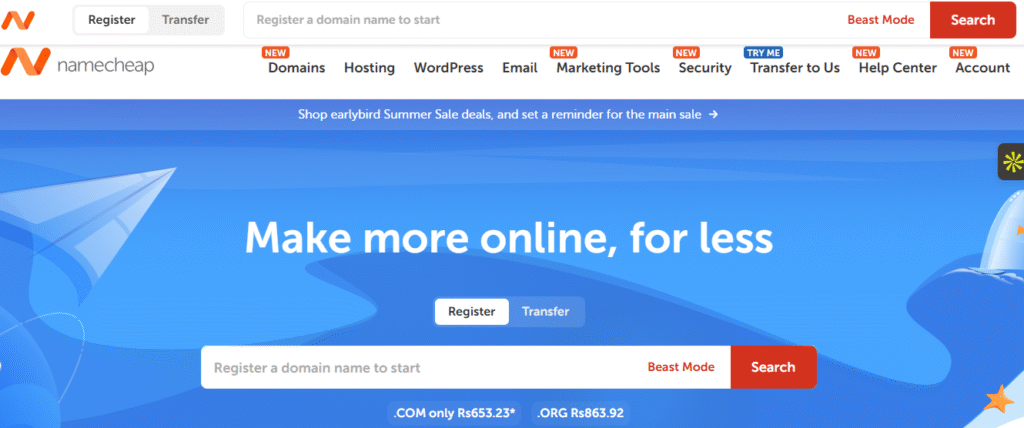
The short answer to the above question is yes, Namecheap is legitimate. The company is an ICANN-accredited domain registrar that has been in the business of domain buying and selling since 2000.
Here is the complete evidence so you can verify Namecheap’s legitimacy yourself and make an informed decision
As of today, Namecheap manages 23 million domains globally, and it was acquired by CVC Capital Partners at a valuation of $1.5 billion in 2025.
It is the world’s 2nd largest domain registrar and is known for its deals and offerings for domain names.
In fact, I even purchased my domain name from Namecheap for this site.
That being said, being a legit domain registrar does not mean no complications. There are three main concerns to look into when you are purchasing your domain name from Namecheap.
First, a 2023 email phishing attack via a third-party supplier, a 2025 company acquisition by a private equity firm, and a renewal pricing structure that surprises first-time buyers.
And we will cover all three of these concerns below in the blog, honestly and in depth.
2. Is Namecheap a real company? Verifying the basics
a. Legal name and registration
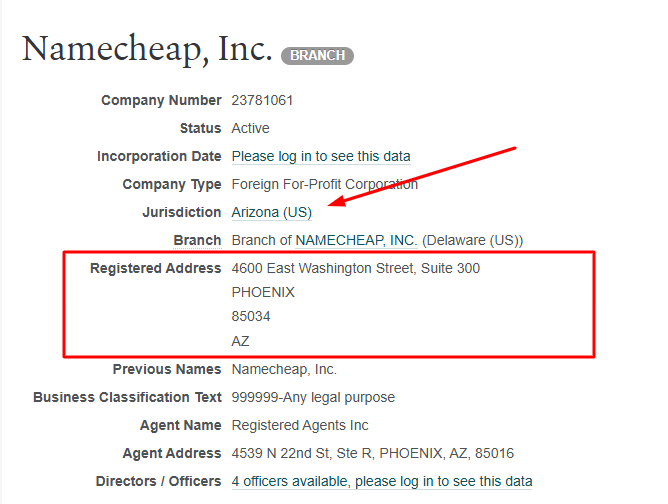
Namecheap is a 100% legit and legally registered company with its head office in Arizona, USA. You can see the entire office address from the above image.
This proves it is not an anonymous company or not a PO box. It has a real address with a real commercial building in a real USA city.
Apart from its head office in USA, Namecheap has several branch offices in UK, Singapore and India.
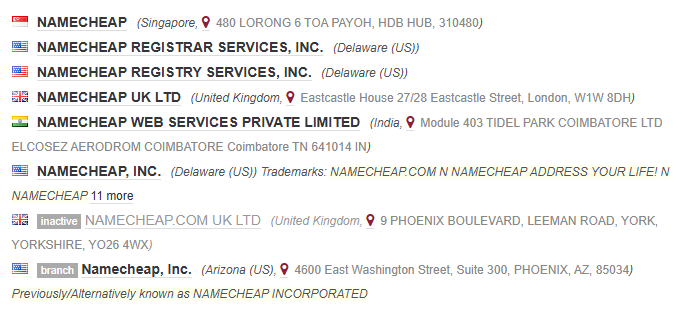
You can get more information about their company and offices from the official website of opencorporates.com
b. Who founded it?
If Namecheap is really a company, then it should also have a real founder. Namecheap was founded by Richard Kirkendall in 2000.
He started the company as a domain reseller and then grew it into a full domain registrar and web service company in the span of 25 years.
Richard is publicly known, has a well-documented profile and career in the web and domain industry, which makes the company real and 100% legit.
I also went through Richard’s LinkedIn, which clearly highlighted his career and achievements at Namecheap.
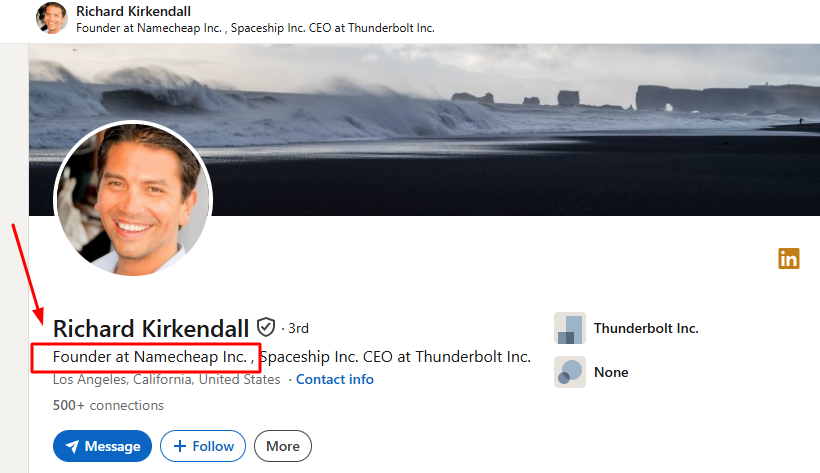
Although the LinkedIn profile of Namecheap’s founder does not justify if the company is real or not, it does give certain positive indications about the legitimacy of the company.
c. The September 2025 ownership change
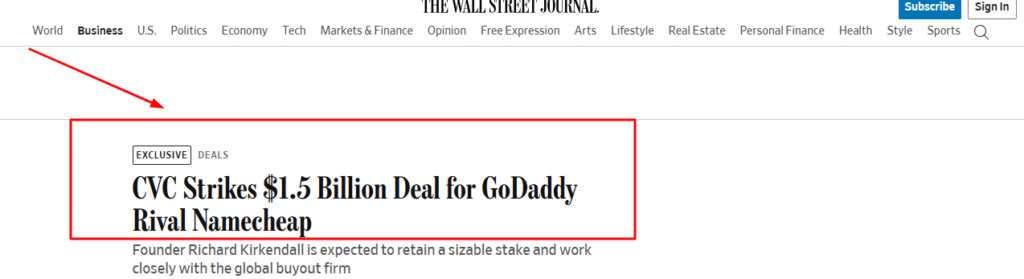
Another thing which makes Namecheap a real company is its acquisition by CVC Capital Partners in 2025. CVC Capital Partners is one of Europe’s largest private equity firms with more than $200 billion in assets under management.
It acquired a majority stake in Namecheap at $1.5 billion. Founder Richard Kirkendall retains a significant stake but stepped down as the CEO of the company.
He was replaced by Hillan Klein, who had been Namecheap’s COO since 2013.
You can also read more about the acquisition at Wall Street Journal. This acquisition proves the legitimacy of Namecheap as private equity firms like CVC will do complete due diligence before acquiring any business.
d. Financial scale
Namecheap’s revenue was around $389 million in 2024 and 18% year-on-year increase.
A company generating $400M+ in annual revenue from domain registrations is not a fly-by-night operation. This clearly proves that Namecheap is a real business and not a scam company.
e. Domain scale
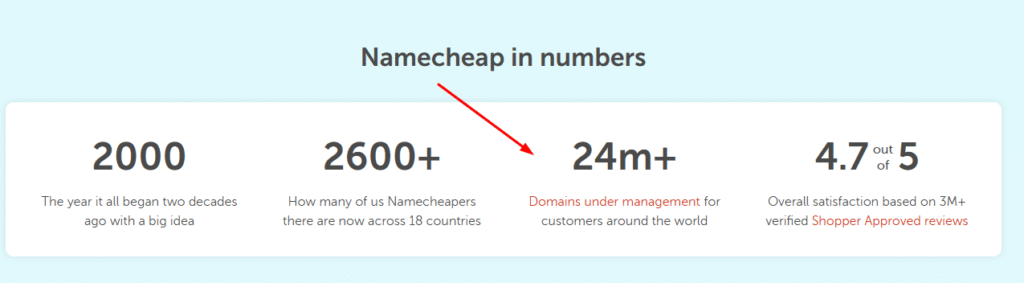
24million+ domains under management. The world’s second-largest independent domain registrar behind GoDaddy. Major brands including Figma and Buffer use Namecheap for domain management.
f. Ukraine workforce
Namecheap has more than 1000 staff from Ukraine, particularly in Kharkiv. When Ukraine and Russia war started in February 2022, Namecheap immediately suspended all its services for Russian-registered customers, citing human rights violations.
This public stance under pressure reveals a company with real employees, real values, and real operational complexity, not a shell operation.
3. 8-point legitimacy check of Namecheap
Up until now, we have discussed the basic legitimacy of Namecheap and understood whether it is a real company or not. In this section of the blog post, we will discover 12 points and determine if Namecheap is legit or not.
a. ICANN accreditation
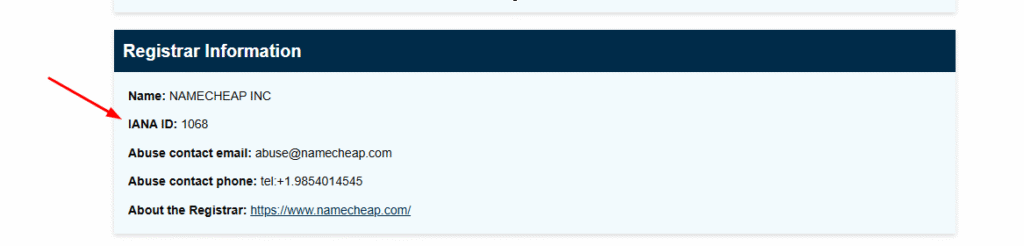
ICANN stands for the Corporation for Assigned Names and Numbers. It is the single most legitimate signal for any domain company. It is a verified regulatory status and not a marketing claim, which requires meeting strict financial, technical and legal standards under a binding registrar accreditation agreement.
And Namecheap is accredited by ICANN, which makes it 100% legit company.
It holds ICANN ID 1068. Namecheap is officially signed an agreement with ICANN under which it is officially bound to protect its customers’ domains from unauthorised transfer or deletion, follow the mandated domain registration process and take part in ICANN’s dispute resolution process.
You can also visit the ICANN official website and search for more details about Namecheap.
b. 26 years in business
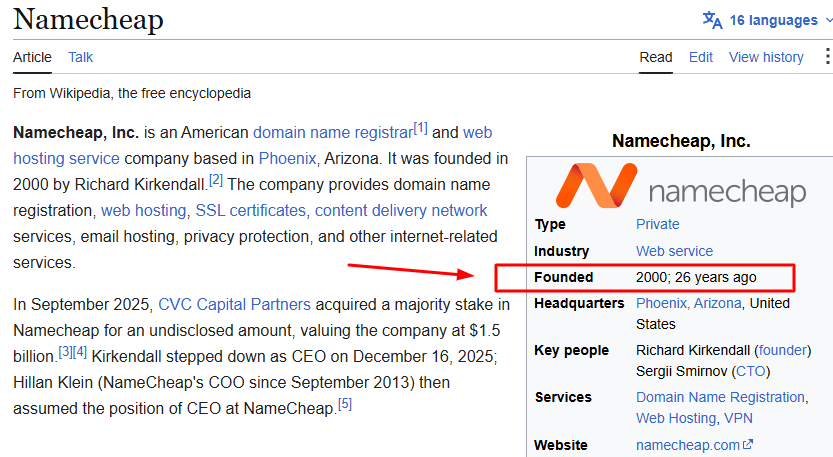
Namecheap has been operating in the domain business since 2000. Which means, they have more than 26 years of experience, credibility, and trust. Fraudulent operations have a characteristic and predictable lifecycle.
They start a business, collect fees, generate complaints and get flagged by payment processors and then disappear within 12-36 months in business.
A company with 20 years of continuous operation, growing revenue, customer base and employees won’t be a scam company.
The longevity of Namecheap in the domain business proves its legitimacy.
The Wikipedia page of Namecheap clearly shows they were founded in 2000 and has 26 years of experience in business.
You can also visit web archives.org and search for the earliest footprints of Namecheap on the internet. This will clear the air, and you will be assured of its safety.
c. Company acquisition
I already mentioned that Namecheap was acquired by CVC in the year 2025 at a valuation of $1.5 billion.
Such type of acquisition made by a private equity firm requires months of institutional due diligence, verification of financial records, customer contracts, infrastructure assets, liability of the company, legal standing, regulatory compliance, and so much more.
If Namecheap were a scam company, it would have not survived this level of scrutiny.
The $1.5 billion valuation is the most powerful proof of Namecheap’s legitimacy.
This represents thousands of hours of professional verification and scrutiny by a firm that manages $200 billion and cannot afford to invest in a fraudulent company.
d. Trustpilot ratings
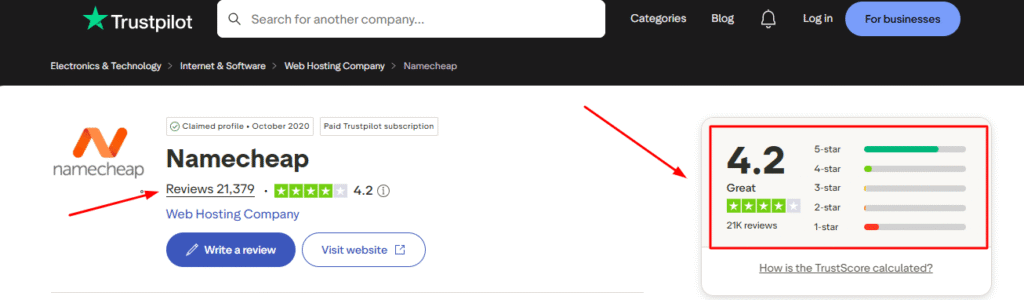
As of today, Namecheap has a stunning 4.2 out of 5 ratings on Trustpilot from 20,000+ verified users.
Trustpilot uses verified purchase confirmation to filter reviews. They only show ratings of real users who have actually used the product or services.
Therefore, the Trustpilot ratings are documented customers’ interactions and not anonymous opinions. At this level, getting fraud ratings are next to impossible.
Besides the Trustpilot ratings, Namecheap also has good ratings across verified sources like (G2, TrustRadius, Trustpilot) is detailed, specific, and consistent.
Users of Namecheap have praised it for pricing, WHOIS privacy, and support responsiveness.
e. Free WHOIS privacy and transparent checkout
No matter from which domain registrar you buy your domain, make sure that your registrar offers free WHOIS privacy, which is a protection of your personal information like name, email address and financial data from public databases.
WHOIS privacy is important to reduce spam and phishing risk. GoDaddy and some other domain registration companies charge a certain fee for WHOIS, but Namecheap offers it for free.
If you buy a domain name from Namecheap, then at the checkout page, you get an option to add free WHOIS privacy to your domain.
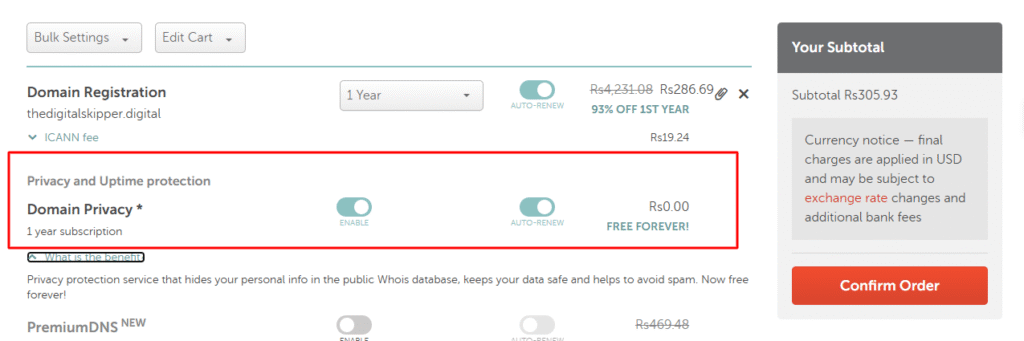
Free domain privacy at the checkout process clearly explains the safety and care that Namecheap follows towards its users. It also gives a clear cut indication of Namecheap’s transparent price without any hidden charges and addons.
f. 24*7 live chat support
Another cool feature about Namecheap is that it offers 24*7 live chat support with real human agents that are available around the clock.
Scam domain companies typically avoid giving live chat support to users because it carries accountability.
Offering 24/7 live chat with real agents (not bots) is a significant operational investment that only legitimate, stable companies maintain at scale.
In fact, the live agents go an extra mile to solve each query of new and existing users both.
Here’s a snapshot of live chat with agent of Namecheap.
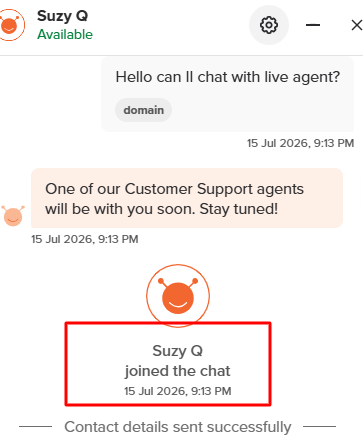
I have sent a message at 9:13 PM and within a few seconds, live agent joined the chat. That shows how quick and responsive their team is. I also asked a few queries regarding domain transfer and their team supported me through the chat.
The best part is that the chat window does not close until the customer decides to close it from their end.
This reveals that Namecheap’s support is genuinely good for standard queries and struggles with escalated or complex disputes.
Up until this point, I have only discussed the evidence that supports Namecheap and proves they are a legitimate company.
However, there are a few things that happened in the past that raise questions about the privacy of users’ data and the pricing policy of Namecheap.
g. Email phishing scam
In 2023, Namecheap customers started getting phishing emails impersonating DHL and MetaMask, coming from Namecheap’s original email address, hello@namecheap.com.
These emails appeared real as they came from the Namecheap account.
The email directed recipients to fake pages designed to steal cryptocurrency wallet credentials and personal financial information. The internal system of Namecheap was not leaked.
The compromise occurred at SendGrid, which was Namecheap’s email marketing provider. It happened via API keys exposed in mobile apps.
Namecheap responded by immediately disabling all email communications, investigating with their upstream provider, and posting transparent public updates. CEO Richard Kirkendall personally responded to hundreds of complaints on Twitter within hours.
The critical distinction for your readers: Namecheap was the victim of this incident, not the perpetrator. The phishing campaign used Namecheap’s trusted brand specifically because the brand was trustworthy enough to exploit.
A fraudulent company does not get impersonated only legitimate ones do. Services were restored the same night and no customer account data was compromised.
h. Company acquisition
In September 2025, CVC Capital Partners acquired a a majority stake in Namecheap and on December 16, 2025, CEO and founder of Namecheap, Richard Kirkendall stepped down as CEO of the company. He was replaced by the COO of the company.
When we talk about the legitimacy of Namecheap, this acquisition is unambiguously positive as it confirms enterprise-level scrutiny of a business.
The users who are concerned about the future services and quality of Namecheap, this is a genuine uncertainty.
Such type of acquisition of any company by a private equity firm is mainly done for revenue optimization, which can lead to an increase in service prices, reduced support staffing or might change the free features which Namecheap is offering for now.
Since CVC also owns WebPros, this can create a vertically integrated hosting empire that can either lead to better service or vice versa.
i. Renewal pricing policy
If you have read the ratings of Namecheap on Trustpilot and some complaints on BBB and Reddit, you must have come across issues related to renewal pricing.
When you purchase the domain for the first time in first year, the prices are generally very low, around $5 to $6.79 per year. But the renewal price of the same domain might go up to $13.98 to $17 per year, which 50% increase.
Many users also complain about the auto-renewal of the domain price, which they do not intend to renew.
The important point to note here is that renewal price differences are an industry-wide standard practice even by other registrars like GoDaddy, Network Solutions and Domain .com
4. What the community actually says — Reddit, Hacker News, and domain professional forums
a. Reddit
I visited Reddit’s Domain community discussion and found that some of the users are against Namecheap and some recommended it for buying cheap domains only for the first year.
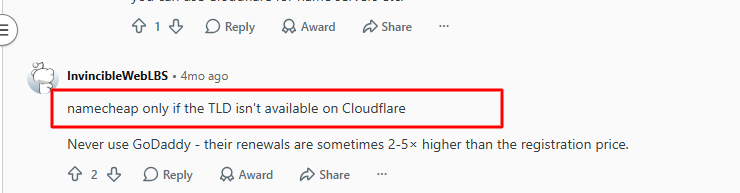
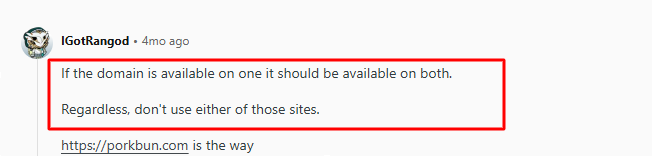
I did not come across much of a positive response for Namecheap as users suggested domain registrars like Porkbun and Namesilos, which offer better pricing, privacy and protection of the domain at affordable pricing plans.
Whether to use Namecheap or not it totally depends on the user.
b. Hacker news
Hacker News users say Namecheap is legit company and a better alternative of GoDaddy for pricing, privacy and protection.
5. The real complaints about Namecheap
Up until now, we have discussed all the positive aspects of Namecheap, which determines it is not a scam domain company.
But if a company is managing 24 million domains, customers will surely generate some complaints. In this section, we will discuss some top complaints by real users of Namecheap.
a. Renewal price is high
Many complaints in BBB forum by users point that Namecheap’s renewal prices are insane. Users describe their frustration when the renewal price exceeds up to 100% than what they actually paid during the first year for their domain.
Some users also complain about the auto-renewal of domain name and being charged extra amount even if the users did not wish to renew their domain.
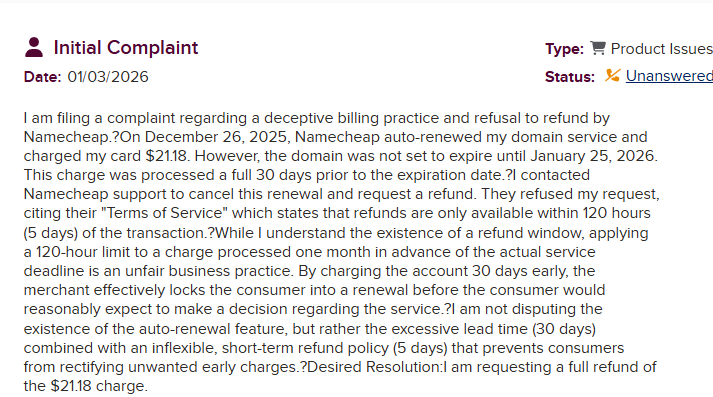
The major problem here is that first-time buyers miss the auto-renewal price disclosure.
This is the responsibility of Namecheap to give the complete details about Autorenewal during the checkout process.
The renewal price and auto-renewal policy should be disclosed at checkout page in more transparent manner.
b. Account access issues
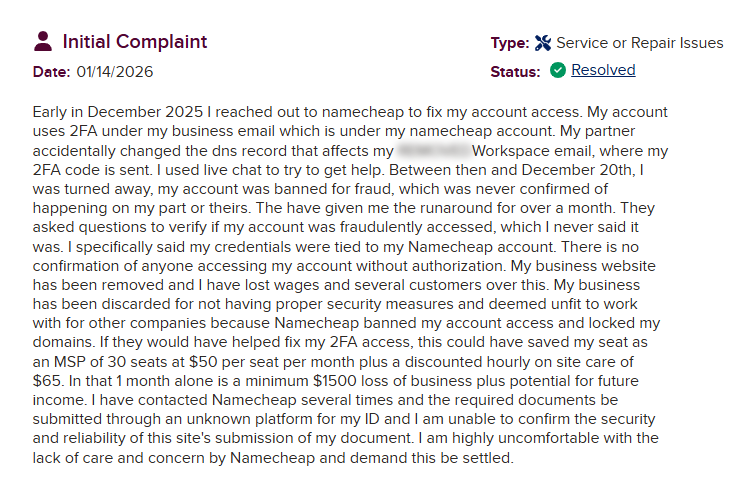
Another complaint by users on BBB and Trustpilot is related to users’ accounts being locked by Namecheap’s screening system, with the unlock process requiring days of verification.
One of the users pointed that he had to live chat for 17 hours during the process of 3 days to get his domain back.
Such issues are serious, and Namecheap should take active steps to deal with such cases.
c. Domain suspension without notice
One April 2026 BBB complaint documented Namecheap suspending a domain without sending the mandatory notification required by their own policy.
6. My personal experience with Namecheap
I will share my personal experience of buying my website’s domain with Namecheap.
a. Domain name
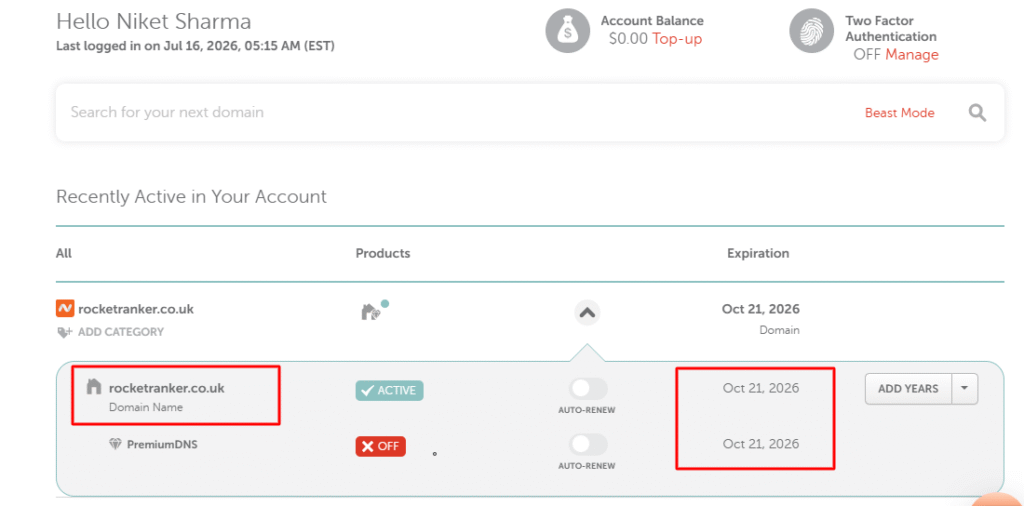
Here is the dashboard of my Namecheap account for this website. I purchased this domain in the year 2024 for a period of two years as the pricing becomes cheaper if you purchase a domain for a long duration. I have not yet renewed my domain as the expiration period is coming up soon.
The overall dashboard of Namecheap might look intimidating if you are using it for the first time, but as you start using it regularly, you will get hands on it.
b. Pricing
How much was i charged for buying my first domain from Namecheap?
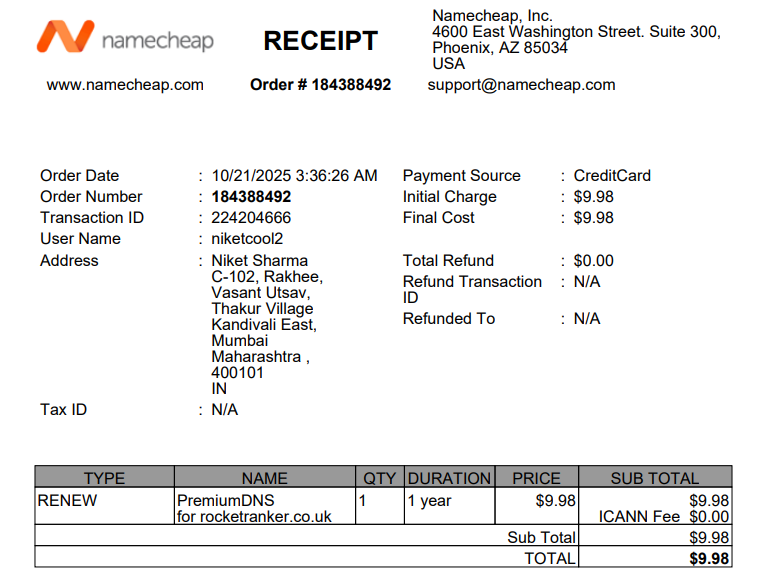
I was charged $9.98 for premium DNS which is opted for more security and protection. ICANN fee was zero and there is no hidden or additional fees charged.
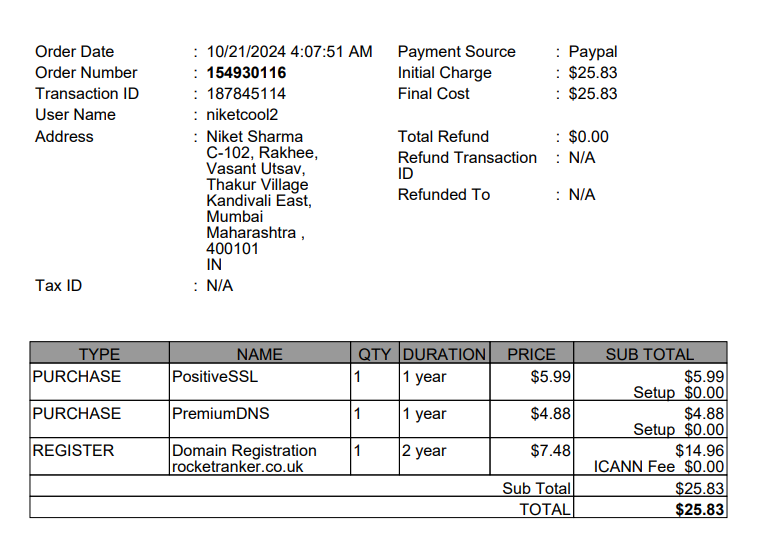
For the actual domain name along with SSL and Premium DNS i was charged $25.83 which included the fees for SSL and DNS as well. I took domain registration for two years and the cost of per year for domain registration was only around $14.96.
I still feel SSL and DNS management should not be charged as some of the domain companies offer these services for free.
Also, if you plan to buy hosting from Hostinger, you will be getting free SSL.
c. Setup
The setup is easy, and there is nothing to be done on your part. If you are buying hosting from another company, you just have to make changes to the DNS from your dashboard.
Your domain will reflect in your dashboard the next second after making the payment.
d. DNS management
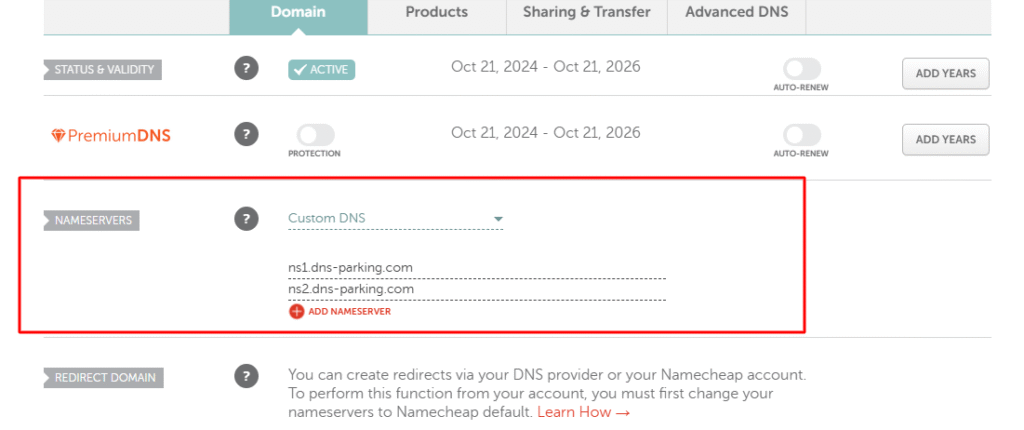
In your dashboard, you will get the option to manage your DNS. You just have to take the name services code from your hosting company, then paste it in the DNS section.
e. Auto-renewal
Unless you disable auto-renewal, Namecheap won’t charge for it. You get an option in your dashboard to enable and disable the auto-renew feature for your account.
f. My complete package
The complete package cost me around $25 for two years, which is quite decent, I feel.
7. How to protect yourself when using Namecheap
If you want to protect your domain from being charged extra, then follow the steps mentioned below.
a. Check renewal price
When you purchase a domain name from Namecheap, make sure to read each and every detail mentioned on the checkout page. This is where most of the details regarding your pricing, renewal updates, and add-on services are mentioned.
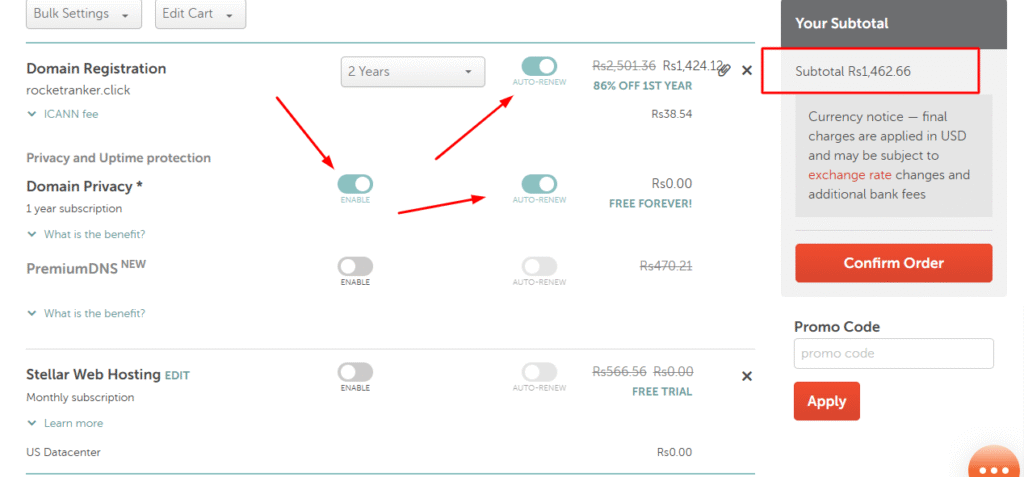
From the checkout page, the most important details are total pricing for the number of years you are buying your domain, check if auto-renewal is enabled or disabled, whether domain privacy is added or not and all the other important details.
Most of the time, the auto-renewal will be ticked by default, but you can switch it off by making changes.
b. Enable or disable auto-renewal
As seen in the above image, you can enable or disable the auto-renewal feature.
If you keep it on, then payment will be automatically deducted from your card at the time of renewing your domain or hosting, whichever you have purchased from Namecheap.
Sometimes, the renewal price is much higher than the purchase price for the first year.
This is where most of the customers feel like being scammed or charged extra. But in reality, they have not disabled the auto-renewal feature.
c. Enable two-factor authentication
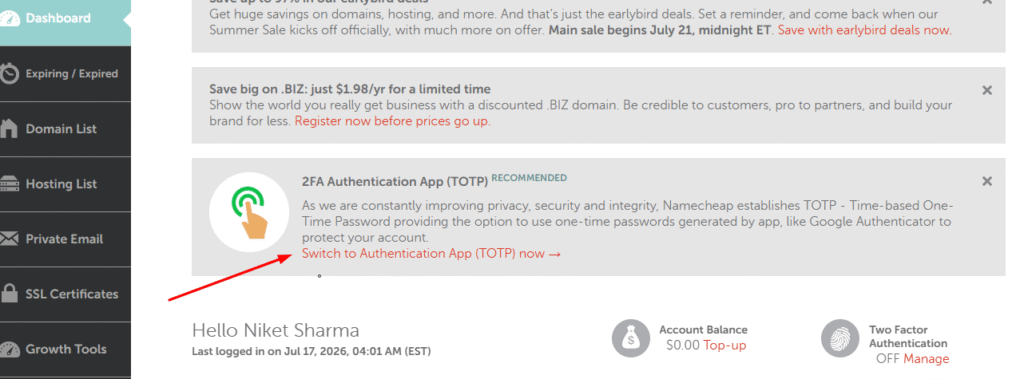
From your dashboard, you need to enable the two factor authentication which will add more safety and keep your account protected from unwanted logins.
d. Enable domain lock
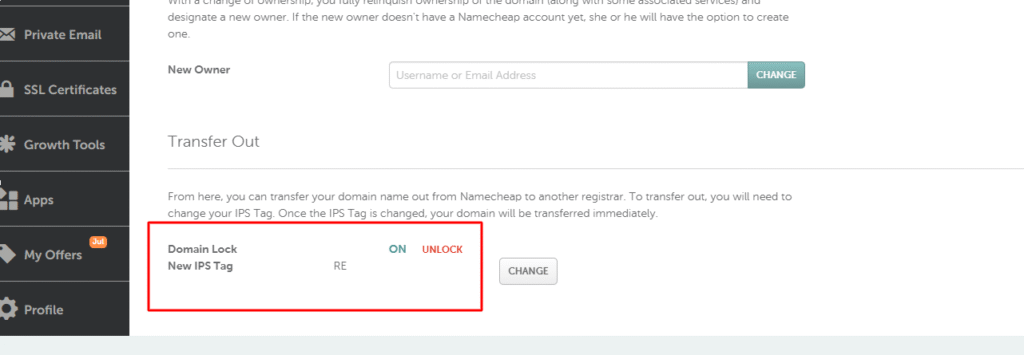
From the domain management dashboard, you need to head over to the sharing and transfer tab where you will find an option to lock and unlock your domain.
Always lock your domain as it will protect any transfer of your domain without your approval. It is the most important for protecting your domain from unwanted transfer.
e. Be aware of email phishing scams
Look at the 2023, email phishing scam incident. Any email claiming to be from Namecheap that asks you to share login credentials or OTP or any other personal details should be verified by checking at Namecheap.com yourself.
Never click on any suspicious link that comes from an email address with Namecheap’s original name on it.
f. Keep your WHOIS contact email accessible
Namecheap uses your WHOIS registrant email to verify domain ownership in dispute resolution.
If that email address ever becomes inaccessible (as happened in one BBB complaint where a user lost access to a university email), recovering domain control becomes significantly harder. Use an email address you own and control long-term.
8. Final verdict
Yes, Namecheap is 100% legitimate domain registrar. It is ICANN accredited and in the business of domain buying and selling for 26 years.
It also manages 24 million domains and was acquired by a major PE for a valuation of $1.5 billion.
Although Namecheap has been in the news for its email phishing scam and top-level management changes, it is still a legitimate domain registrar.
9. FAQs of is Namecheap legit
Yes, Namecheap is legit ICANN-backed domain registrar with (IANA ID 1068). It manages 24 million domains and holds 4.2 out of 5 Trustpilot rating from 22,000 user reviews.
Yes. Namecheap holds active ICANN accreditation under IANA ID 1068. Verify this yourself at icann.org/registrar-reports by searching “Namecheap.” Active status is confirmed with no sanctions or suspensions on record as of July 2026. ICANN accreditation means Namecheap is contractually bound under international oversight to protect your domains from unauthorised transfer or deletion.
Namecheap was never hacked but in 2023 its third-party email provider was compromised, allowing many phishing emails to be sent from Namecheap’s email address. Namecheap’s system was not breached and no customer data was compromised.
Yes. Namecheap includes lifetime WHOIS privacy protection with every domain at no additional cost.