
Are you a digital marketer, blogger, freelancer, or online business owner wondering if Payoneer is available in India or not?
Payoneer is one of the oldest cross-border payment platforms in India. But is it still accessible? And what exactly changed when RBI granted Payoneer a PA-CB approval in January?
Payoneer is available in India and has been trusted by hundreds of thousands of Indian freelancers, Amazon sellers, and exporters.
In January 2026, Payoneer saw one of its biggest regulatory developments in India yet. This was the RBI PA-CB approval which covers both inward and outward transactions.
Wise, by comparison, has not allowed these transactions on Indian licences. However, this approval came with three significant limitations specific to India which every Indian needs to keep in mind before signing up on Payoneer.
1. Is Payoneer available in India? The quick answer
Yes, Payoneer is fully available and functional in India for more than 10 years. I am personally using Payoneer to send and get paid from some of the foreign clients to whom I offer SEO and consulting solutions from India.
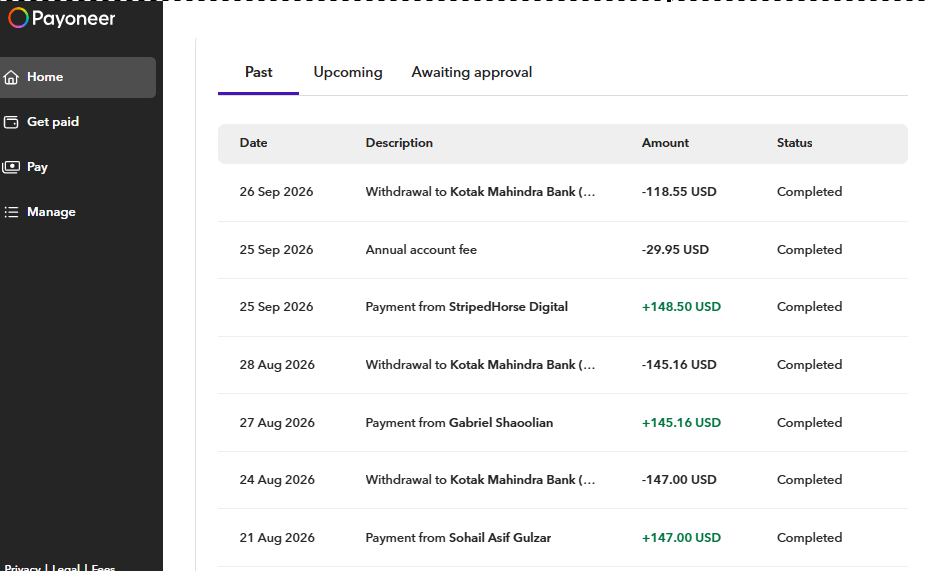
Here’s a snapshot of my personal Payoneer account, which I have been using from India.
Some of the key features of Payoneer are:
- A Payoneer account can be opened with Indian KYC by submitting a PAN card, bank account details, and other details as you are asked for.
- You can receive foreign currency (USD, EUR, GBP, JPY, AUD, CAD).
- You can also get foreign bank account details for US, UK, and EUR banks.
- The foreign currency can be withdrawn to an Indian bank account in INR.
- Marketplace integrations are allowed across platforms like Upwork, Fiverr, Amazon, Airbnb, etc.
- Outward remittance is permitted as it is now PA-CB approved as of January 2026.
- Mass payouts to contractors are allowed but up to 200 in one batch.
Although Payoneer is available in India, there are some limitations to it.
- Prepaid Mastercard is not available for Indian residential addresses.
- Users cannot hold foreign currency balance as RBI PA-CB framework requires conversion of the currency to INR.
- These are some of the features that can affect how one actually uses Payoneer. The full understanding of each feature is discussed below along with PA-CB approval.
2. Payoneer’s regulatory standing in India
Payoneer is available in India, and it is an RBI-registered subsidiary under the entity name “Payoneer India Pvt Ltd”. This means Payoneer is a registered private company in India with real employees working in the company and with a CEO.
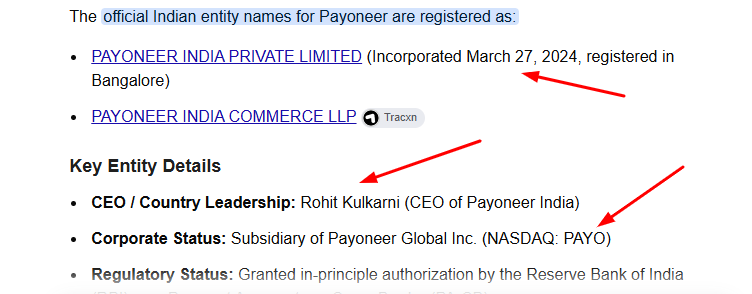
In India, Payoneer works as a subsidiary of its parent company, which is a listed public company on NASDAQ.
Payoneer has been active in India for over a decade, and I have also been using it for 4 years now. It has served Indian freelancers, exporters, and marketplace sellers long before the PA-CB framework existed.
This platform processes over $80 billion in global transaction volume annually and serves nearly 2 million active customers worldwide.
What does the 2026 PA-CB in-principle approval actually cover?
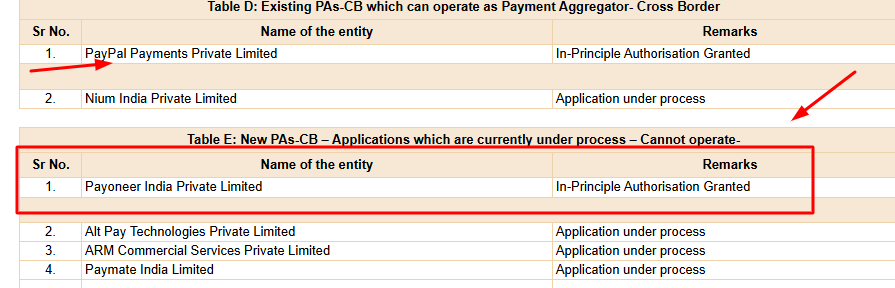
In Jan 2026, the RBI gave permission to Payoneer India Private Limited to operate as a cross-border payment aggregator for making both inward and outward transactions.
The CEO of Payoneer India, Rohit Kulkarni, cited it as a milestone enabling better cross-border payment solutions for both import and export transactions.
PayPal had already received this from the RBI, as you can check in the image below.
What does the PA-CB approval enable?
The PA-CB approval has enabled a broader range of Payoneer products for Indian SMBs. Accounts now have payable features that allow Indian importers to pay their foreign suppliers directly, and the KYC onboarding has been streamlined.
End-to-end cross-border payment solutions are permitted for both Indian exporters (inward) and importers (outward). Also, all transactions are now reported to the RBI under FETERS guidelines.
What does the in-principle status mean?
The in-principle approval is not a full and final licence. It indicates that the RBI has reviewed Payoneer’s application and finds it eligible. However, it is subject to compliance conditions being met.
As of today, Payoneer has not publicly announced receipt of the final PA-CB licence. The Business Standard notes that 19 entities hold full PA-CB authorisation as of January 2026.
How can users verify?
The official announcement of this approval is on Payoneer’s investor relations page at investor.payoneer.com and is also confirmed in a PRNewswire press release dated January 22, 2026. Readers can also verify the RBI approval directly on this page.
3. What Indian users can get from Payoneer in India?
Let us now discuss what Indian users can actually get through their Payoneer account in India.
a. Account opening
Indian residents can open a Payoneer personal or business account free of cost. They can register with standard KYC which typically requires documentation involving an Aadhaar card, PAN card, and/or Passport.
I have personally opened my account with just a PAN Card and a few other pieces of information.
The signup process is available online via a web application or mobile app on both iOS and Android.
It takes around 1-3 business days for account approval. There is no monthly account maintenance fee applicable on active users.
However, there is one important caveat: a $29.95 annual inactivity fee will be applicable if the user’s account receives less than $2000 in total receipts within any 12-month period.

This account maintenance fee will be automatically deducted from the bank account you have integrated with it.
b. Getting paid through Payoneer in India
Indian users of Payoneer can also get paid in multiple ways, either by sending an invoice, sharing Payoneer email details, or providing bank details to the clients or the person from whom they want to get paid.
As of now, Payoneer provides three different ways for Indian users to get paid.
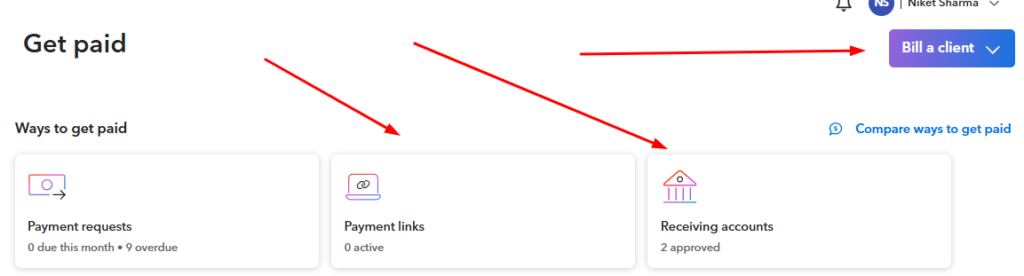
Payment links, invoice generation and bank account details.
For the bank accounts, you get details for US and EUR bank accounts if you are in India. USD currency contains a US routing number and account number, EUR currency requires an IBAN (International Bank Account Number), and GBP needs a UK sort code and account number.
Clients just have to pay a local account, and no extra international wire paperwork is required.
Funds are received in the foreign currency balance and then converted to INR for withdrawal to Indian banks.
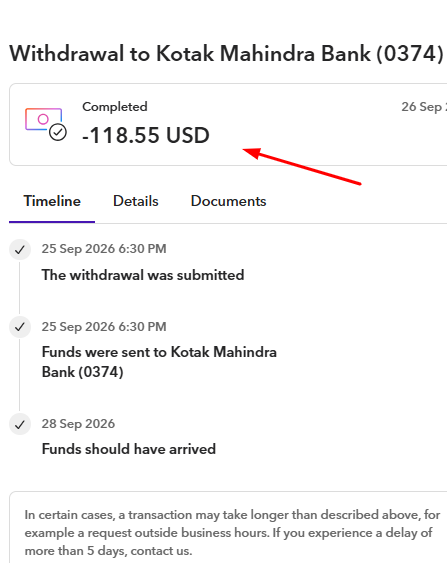
Funds will be automatically transferred in INR directly into your bank account.
Indian users cannot hold foreign currency balances indefinitely under the RBI PA-CB framework. The conversion and settlement of funds to the Indian bank account must happen within a defined period of time.
c .Marketplace integration
Payoneer’s deepest competitive strength in India is its marketplace integration network. Payoneer directly connects with 2000+ platforms globally.
This includes Upwork, Fiverr, Toptal, Amazon Global Selling, Airbnb, Walmart, eBay, and Etsy. For Indian freelancers and marketplace sellers, it is a huge benefit as this means a direct flow of earnings from the marketplace to the Payoneer balance without any additional payment steps.
The integration is native as both Upwork and Fiverr offer Payoneer as a first-class payout option. This breadth is unmatched by any India-first competitor as of July 2026.
Payoneer also offers Capital Advance against future Amazon receivables. This is an eligibility-based financing feature unavailable on most alternatives.
d. Withdrawal of money
The option to withdraw from a Payoneer balance to an Indian bank account in INR currency is fully available. Payoneer has its own conversion rate for foreign currency, which is typically a 1-4% markup above mid-market and varies by volume and account tier.
After this conversion, the Payoneer balance is transferred to the linked Indian bank account. The settlement process typically takes 1-2 business days for Indian users.
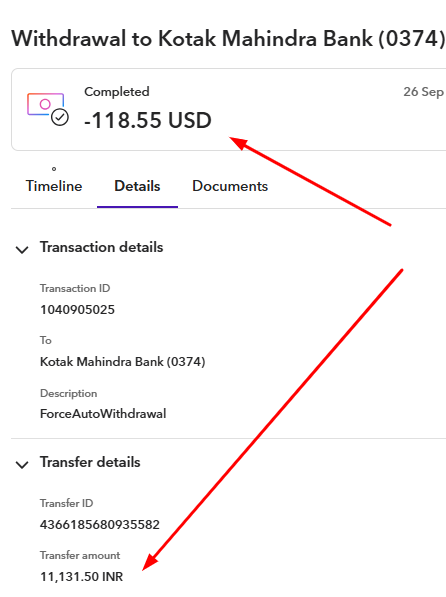
Although the minimum withdrawal amount varies by currency, it is typically around $50-$100.
Since the March 2025 fee restructure, any withdrawal under $400 carries a flat fee of $4.
Payoneer also supports Payoneer-to-bank withdrawals via its mobile app in 150+ countries. This makes it convenient for Indian users who travel.
e. Outward remittance
Covered under Payoneer’s January 2026 in-principle PA-CB approval for both inward and outward transactions. Outward remittance capability is expected to roll out fully as full authorisation is granted. Verify current availability at payoneer.com/en-in/ as it may not be fully live for all users yet.
f. Account security
The account safety and security of Payoneer are amazing. It has two-factor authentication, which you need to enable at your account-level settings.
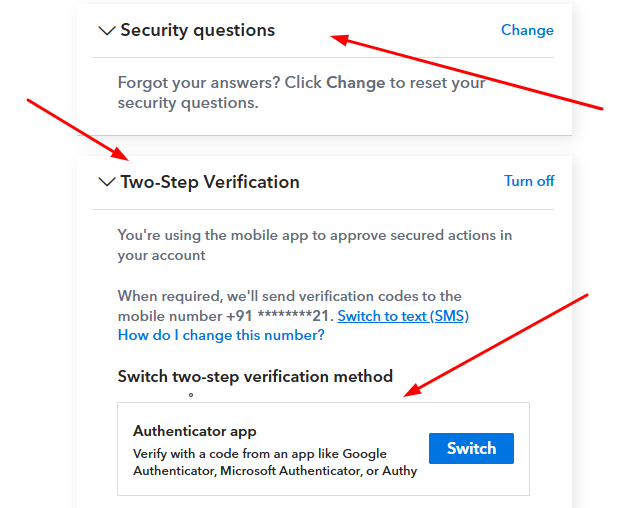
It also has security questions where you need to answer a question in order to log in to your Payoneer account. If you don’t want the hassle of two-factor authentication or answering security questions, you can enable an authenticator app to get a code from an app like Google or Microsoft.
Apart from that, Payoneer also advises all their users from India and other countries to change their password every six months.
g. Foreign bank accounts
You can get foreign bank account details for US, EUR, and UK banks in India with the help of Payoneer. This will help you get money from bank transfers very easily.
You just have to submit your PAN details, proof of address and fill in the basic information.
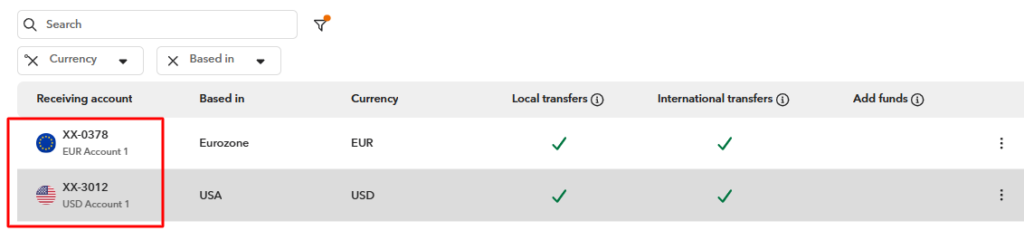
I have personally had two bank accounts approved by Payoneer in India.
Once your foreign bank account registration is completed and the account is approved, you will receive the following email.
From now on, you can start using Payoneer for international bank transfers too.
h. Payment request to client
Indian users of Payoneer can also generate invoices and get paid by their clients. They get two options for invoice generation: One is the standard payment option, which is a fast and easy way to get paid. Second is the auto-generated invoice, which can provide tax benefits.
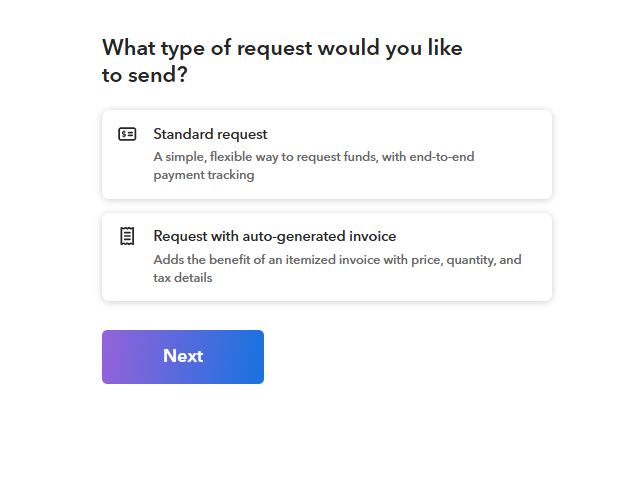
Apart from invoice generation, Payoneer also features quick links for payment and batch payments if you want to receive multiple payments at once.
4. My personal Payoneer journey and experience
Yes, I have been personally using Payoneer for quite a long time, and I prefer it over PayPal as well. What I have realized over the years of using Payoneer is that they do not restrict or ban accounts without a reason.
I had a PayPal account as well, but it got permanently banned by the PayPal team without any reason. On top of that, PayPal’s customer support is worse and they will not give you a single reason for your account getting banned.
Here are some of the features of Payoneer that I love the most.
a. Quick payment links
The number one feature that I love about Payoneer is its quick payment links, which allow you to generate fast payment links just by entering the amount and details about the services or products sold.
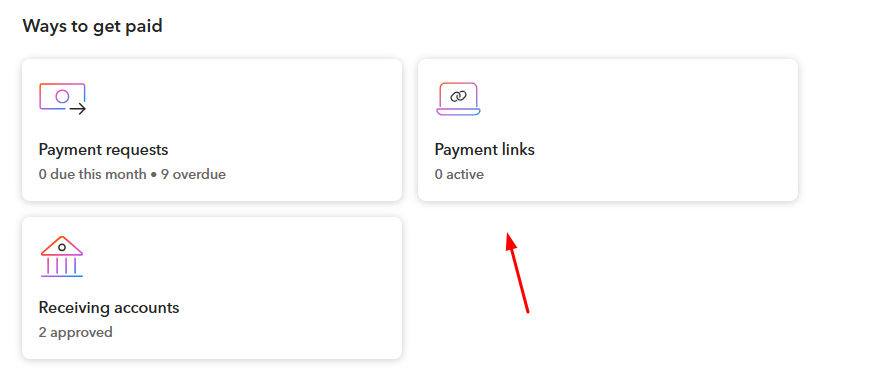
Once the payment link is generated, you can share it with your client and get paid quickly.
Apart from the payment link, you also get two additional ways to get paid: by sending an invoice or by opening a bank account in a US or EUR bank through Payoneer. You can share those bank account details with clients and get paid.
b. Bank account opening
As mentioned earlier, Payoneer allows you to open US and EUR bank accounts by submitting your PAN, address proof, and some other information. Once you submit this information to Payoneer, you will get US and EUR bank details to receive money into your international bank account.
This money can be easily transferred to your Indian bank account.
c. Reports and statement
You can view your Payoneer payments and complete account reports on a yearly, monthly, or custom date basis. You can also download reports for tax purposes or any other reason you wish.
5. Payoneer India use cases
Now that you have received a complete overview of Payoneer’s availability in India, let us understand how you can use Payoneer in India and for what purposes.
a. Freelancers on global marketplace platforms
Independent workers and freelancers are the largest segment of Payoneer users in India. Payoneer natively integrates as a first-class payout option with Upwork, Fiverr, and several other freelancing platforms, making it easy for freelancers to receive payments directly in their bank accounts.
Freelancers do not need to send separate invoices, and no SWIFT codes are required for the payments.
This seamless integration is the reason Indian freelancers have used Payoneer for years. It is important to note that a 2% FX fee applies when withdrawing funds in INR.
b. Amazon Global Selling sellers
Amazon sellers are also among the Indian users who can use Payoneer to sell their products and goods on international Amazon marketplaces like Amazon.com or Amazon.co.uk.
Such sellers can receive direct disbursement of earnings into their Payoneer account.
Eligible Indian sellers are offered the Capital Advance feature, which provides financing against future receivables.
Additionally, FIRA is issued automatically for every inward remittance, ensuring that users can easily maintain GST and income tax compliance.
c. Businesses making outward payments
The latest use case unlocked by the January 2026 PA-CB in-principle approval is that Indian importers can potentially use Payoneer to pay foreign suppliers directly. Users must verify the current product rollout on the official website before relying on this capability.
d. Businesses doing mass payouts
Lastly, businesses like global contractors, affiliates, or vendors that handle mass payments can use Payoneer’s batch payout feature to disburse funds in various currencies to up to 200 recipients per batch.
This specific B2B capability is largely unmatched by most India-first services.
6. What Payoneer cannot do for Indian users right now?
Payoneer India has proved to be a reliable platform for marketplace sellers and freelancers.
However, it comes with specific and documented limitations that are the result of RBI regulatory constraints rather than product gaps in the global platform. It is beneficial for users to learn about them before signing up on the platform.
a. No Prepaid Mastercard for Indian residents:
The Payoneer card is used globally by international users, but it is not available to accounts registered with Indian addresses.
Payoneer users in India can only access their funds directly from their linked Indian bank account via INR withdrawal.
b. No holding of foreign currency balances
According to RBI PA-CB guidelines, Indian users cannot hold foreign currencies like USD, EUR, or GBP in their Payoneer accounts.
Funds must be converted to INR and settled to a local bank account within a defined time period, which means all payments received into the Payoneer accounts of Indian users will be automatically transferred to their linked Indian bank accounts.
c. Annual inactivity fee for low-volume accounts
This is one of the biggest cons of Payoneer. A $29.95 charge applies if annual account receipts fall below the threshold of $2,000. This mostly affects seasonal exporters or part-time freelancers.
d. Not a payment gateway
Payoneer cannot be used as a payment gateway solution like PayPal for website payments.
If your business needs to accept customer payments via a website button, you will need a dedicated service like PayPal or Razorpay.
e. No automated eBRC for Amazon sellers
While Payoneer generates free automated FIRA, it does not provide an automated Export Benefits Realisation Certificate (eBRC). Sellers must process eBRC manually through their Authorised Dealer bank, which can be a hurdle for Indian exporters seeking export incentives.
f. Limited India-based support
Payoneer customer support for Indian users is handled via a global queue rather than a local Indian team.
Several reports highlight extended resolution times for Indian users, especially regarding account verification, account-level restrictions, and even small queries.
FAQs About Is Payoneer Available in India
Q1: Is Payoneer available in India?
Yes. Payoneer is one of the most widely used cross-border payment platforms among Indian freelancers, Amazon sellers and exporters. In January 2026, Payoneer India received RBI in-principle PA-CB authorisation for both inward and outward transactions.
Q2: Can I open a Payoneer account in India?
Yes. Indian residents can open a free Payoneer personal or business account at
their official website. Standard documents (Aadhaar, PAN, or Passport) for
KYC are required and signup is fully online.
Q3: Is the Payoneer debit card available in India?
No. The Payoneer Prepaid Mastercard is not available for Indians. The Fiverr
Revenue Card (a co-branded Payoneer Mastercard) is also unavailable for
Indian accounts. Payoneer does not offer a domestic debit card for India.
Q4: Can I withdraw Payoneer funds to an Indian bank account?
Yes. Payoneer converts foreign currency at its own rate and settles to the Indian
bank account, typically within 1–2 business days. Withdrawals under $400 carry
a $4 flat fee since the March 2025 fee restructure.

Niket Sharma is an SEO specialist, SaaS expert, and freelance content marketer with over 5 years of experience in SEO, blogging, and digital marketing. Through this blog, he shares practical insights, proven strategies, and real-world experiences to help businesses and readers improve their online presence, rankings, and content marketing success.